Showing posts with label David Almond. Show all posts

Monday, 7 November 2016

David Almond Fellowships 2016/17


David Almond with Michael Morpurgo
David Almond; award-winning North East children’s writer, patron of Seven Stories, the National Centre for Children’s Books and honorary graduate of Newcastle University. It seems only fitting that we named our annual fellowships in children’s literature in David’s honour!
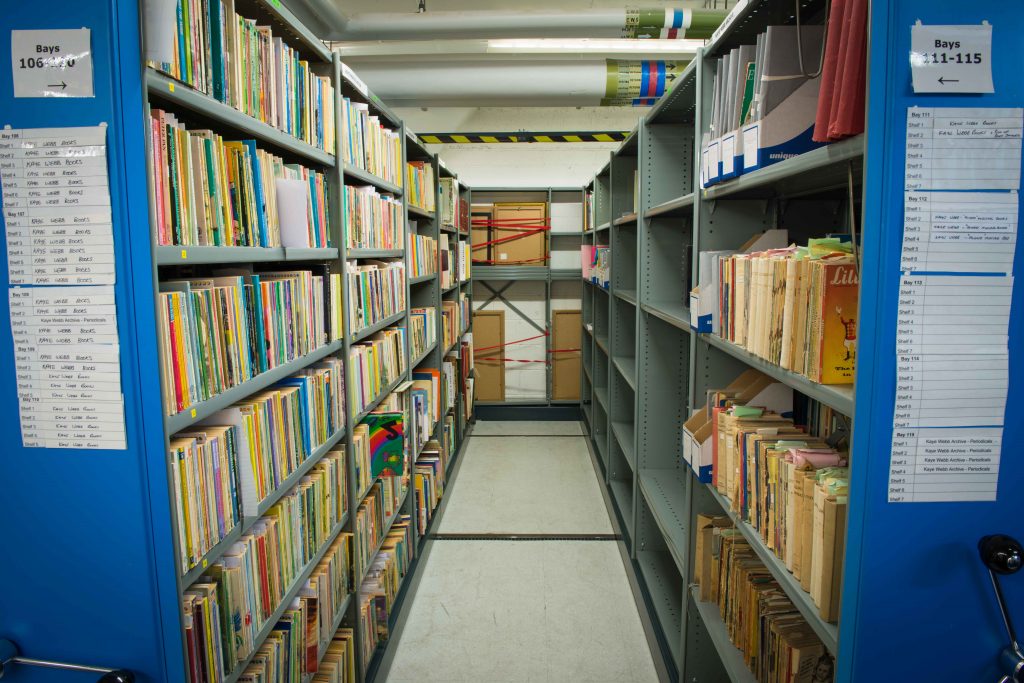
Newcastle University and Seven Stories’ David Almond Fellowships aims to promote high-quality research into the Seven Stories Collection by supporting award holders to make a study visit to Newcastle. And there are so many amazing collections that you could research! You can browse the blog for ideas or check out our collection highlights, catalogue and alphabetical list of represented authors and illustrators. 
Collections at Seven Stories. Image: Seven Stories, the National Centre for Children's Books. Photography: Damian Wootten.
Seven Stories, the National Centre for Children’s Books. Photography: Damien Wootten

We launched the David Almond Fellowships in 2012 to increase national and international access to Seven Stories’ Collection and build new links with researchers. So far, we’ve awarded 11 Fellowships and over half of our Fellows have come from outside the UK.
Lucy Stone, one of our 2016 award-holders, says of her David Almond Fellowship:

“To take up the pen, pencil or paintbrush proffers the chance to make sense of the beautiful, but also perplexing world into which children are born, grow and find their place as an adult. The Judith Kerr Collection contains a myriad of remarkable drawings, paintings and writings child Kerr crafted pre- and during her family’s exile from Nazi Germany. Thanks to a David Almond Fellowship, I had the wonderful opportunity this summer to examine Kerr’s juvenilia, now part of my doctoral research involving consulting archives across Europe and the US to determine what writing and drawing can offer refugee children. Everyone at Seven Stories and the Children’s Literature Unit were incredibly helpful and supportive; the Fellowship proved invaluable.” 
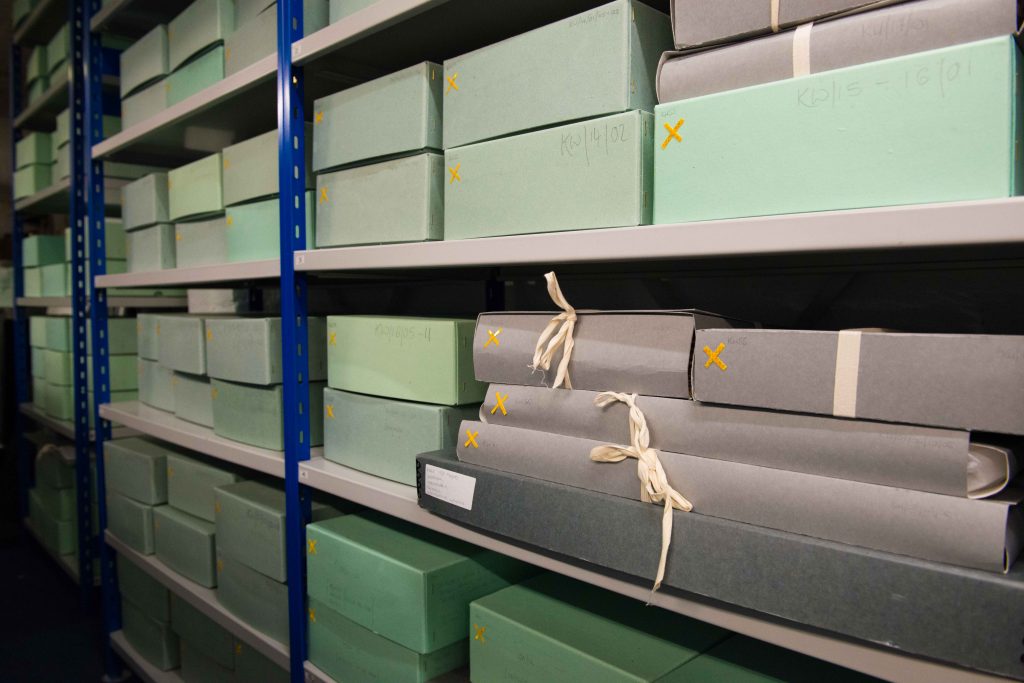
Collections at Seven Stories. Image: Seven Stories, the National Centre for Children's Books. Photograph: Damien Wootten.
Seven Stories, the National Centre for Children’s Books. Photography: Damien Wootten

And, applications for the 2016/17 David Almond Fellowships are now open! You have until 1 December 2016 to apply for visits to be taken before the end of August 2017. Have a look at the David Almond Fellowship Information 2016-2017 for full details of how to apply, and download the David Almond Fellowship Application form.

We would love to welcome you to Newcastle as a David Almond Fellow – and you could even research David’s collection…
For more information about the David Almond Fellowships, visit the School of English Literature, Language and Linguistics website or contact Professor Kim Reynolds.
- Rachel Smith, Vital North Partnership Manager 

Sunday, 28 June 2015

Hartlepool Festival of Illustration

Seven Stories have been happy to be involved in a brand new event around illustration in the North East - the Hartlepool Festival of Illustration.

Working with the festival organisers, we loaned several pieces of artwork from the Seven Stories Collection to an exhibition held at Hartlepool Art Gallery. Artwork from the below has all been on display alongside additional loaned works from Chris Riddell, Sara Ogilvie and John McCrea, amongst others. 

  • Edward Ardizzone
  • Shirley Hughes
  • Polly Dunbar
  • Sarah Garland
  • Angela Barrett
  • Helen Craig
  • John Burningham

As part of the festival, we have also been out on a whirlwind tour of the local area, working with an amazing 730 participants over 10 days. The sessions took place in nine primary schools, one college of further education and in Hartlepool Art Gallery itself. Lynn hosted a spectacular 29 illustration workshops over this time - and is now on a well deserved holiday! This is what she has to say about the experience:

Having completed a two week residency in Hartlepool schools, I feel very privileged to have been involved with such an exciting outreach programme, using original materials from the Seven Stories Collection to help inspire the next generation of illustrators and designers.

Knowing that the exhibition would include materials to illustrate the creative processes in the making of a picture book, I was very keen to develop a primary workshop using illustrator Sarah Garland’s sketchbooks, and Polly Dunbar’s sketches and finished artwork for My Dad’s a Birdman, written by David Almond.

Based in a new school each day, I arrived each morning with 90 sketchbooks, HB pencils, graphite sticks and a gross of felt tip pens. Needless to say these were put to great use, the children hugely excited to have their own sketchbook and pencils, all kindly provided by Cleveland College of Art and Design. The workshops were planned to last between 75-90 minutes. Most followed a similar format with variations depending on the age and maturity of the pupils. 

Of courser it  wouldn’t be a Seven Stories workshop if it there wasn't any book chat! We talked about the children’s favourite storybooks, the authors and illustrators they knew and liked. We browsed picture books selection to look at style. Children talked about why they liked the illustrations and considered where authors and illustrators get their ideas from.

I wanted the children to experience quick sketching, and told them:

“We are going to look, talk, listen, draw, draw, draw again, draw some more, more talking, more drawing, more looking, talking, listening and if there is sufficient time, even more drawing!”

We looked at some facsimiles of artwork in the exhibition. They saw how illustrators use sketchbooks, sometimes drawing multiple images on one page. Sarah Garland’s quick sketches of families in the swimming pool show how little information is needed in a sketch for it to work as a preparatory drawing. They noticed how Polly Dunbar uses just a dot for an eye or a line for the mouth in her Birdman sketches. They considered how an illustrator develops a character from an initial sketch. From the slumped posture in the sketch of Lizzie’s dad, they started to understood how an illustrator can portray a character’s emotions in the pose or facial expression. We looked at Angela Barratt’s graphite sketch and finished drawing for The Snow Queen, and Helen Craig’s artwork for Angelina Ballerina.

An illustration workshop needs drawing time! We started drawing birds.

“How many different birds can you draw in a minute?”

We drew more, changing the size of beaks and wings to see how that affected the drawing. We handled feathers and a selection of soft toy birds. Talking about their achievements at the end of the sessions, many highlighted using graphite sticks to draw their real and imagined feathers as a favourite part. Graphite can be used for clean sharp lines or blended and smudged to create featheriness. It was a new medium for most of the young artists.

Examples of the students work
Next: drawing a human. I wanted the children to try drawing a simple human character, with not too much detail, as we would use our experience of drawing feathers and birds to transform our character. There was a real buzz throughout the entire workshops. I read extracts from My Dad's a Birdman or retold parts while the children were busy drawing.

Throughout the workshops children proudly showed back their work to each other and talked about their achievements. Every child participated. No one once said that they "couldn’t" or "didn’t" know how to draw a bird, feather or human. They were working as illustrators.

Next step storyboarding. We compared different approaches to storyboarding. I had included some additional storyboard facsimiles from the original Picture Book in Progress exhibition, held at Seven Stories visitor centre in 2014. The groups compared these with John Burningham’s storyboard which features in the Festival  exhibition. Children pointed out that some of the frames have very little detail, yet the sketches of animals are drawn in greater detail.

We were able to see how Sarah Garland’s storyboard for Doing Christmas was roughly sketched on lined A4 paper, how Judith Kerr used very faint drawings in her storyboards for Mog the Forgetful Cat and The Tiger Who Came to Tea. In contrast, Helen Cooper’s storyboard for Little Monster Did It includes everything she wants on the page including minute text. I heard  “wow” almost every time someone looked closely at this one. There is no right or wrong way in developing a storyboard - illustrators use them as they need.

Everyone had created a new character so the next stage was to think of what happened to them.  Everyone had a go at storyboarding 3 frames to show the participation: Frame 1 getting ready to start. Frame 2 character mid flight, to show the shape they make in the air.
Frame 3 Success? Failure? Cheers or splash?

In the extended workshops children then worked for some time developing one of their storyboard frames into an actual illustration. In her finished artwork, Polly Dunbar portrays   dad and Lizzie tumbling through the air wearing their beaks and feathers. Many of the participants worked on their own version of this scene.

On the second last day of the residency I led the illustration workshops in the Art Gallery surrounded by world class illustration.  I adapted the session for working with the older B Tech Students from East Durham College to include David Almond’s initial character notes for his Birdman, asking them to try to think along these lines when developing their own characters. They considered appearance, their character’s fears and desires. Would they have a special object? Several students annotated their drawings, finding this a useful way to develop ideas.

In addition to exploring the creative process through the original materials from the exhibition, the students were able to compare how different illustrators respond to the same subject, and compared Ralph Steadman’s illustration from Treasure Island with Chris Mould’s interpretation of the same scene.

On display, next to our workspace were several illustrations from Chris Riddell’s Ottoline books.  Chris had been named as the ninth Children’s Laureate days earlier. In his five point plan he includes the joy of sketchbooks and celebration of reading for pleasure. I talked about this with the groups and how Chris had been one of the key speakers at the festival launch.

We were doing just what he was suggesting, doodling with our birds and feathers and enjoying drawing in a beautiful sketchbook.

The  feedback has been  very positive with children reflecting on  what they had learnt or enjoyed,  including finding out how much works goes into the making of a picturebook. I had a thoroughly enjoyable time. When asked to reflect on something they had learnt as a result of the workshops, one 8 year old boy wrote:

“ I learnt I could draw!”

Lynn Telford

The Picture Book in Progress Illustration workshops were part of the Hartlepool Festival of Illustration, a partnership between Cleveland College of Art and Design, Hartlepool Borough Council and Seven Stories.
  

Friday, 1 May 2015

All About: Birds

This month we are all batty about birds! Taking a look again at an illustration, archival item and a book to explore three very different elements of our collection.


My bird alphabet, designed by Shyam Varma (Hutchinson & Co. Ltd, 1960)
This month’s book is My bird alphabet, designed by Shyam Varma and published by Hutchinson & Co. Ltd in 1960. This is one of several ‘Bird’ themed alphabet books to be found in ‘Pat Garrett’s ABC collection’ and is a good example of the sort of non-standard format books we hold.

The pages in this book concertina in/out from either side.  Most pages include an illustration of a named bird, and in common with many ABC books, the appropriate initial letter is given in both upper and lower case fonts. Some birds are very familiar (Duck and Hen) while others are probably less so - Ibis, Quail and even Xema! In the photo above you will see an interesting interpretation of the letters ‘A’ and ‘Z’:  ‘A’ is for Aviary "the home of the birds"; while ‘Z’ is for Zoo "where most birds are found".

Pat Garrett has been kindly donating duplicate copies of titles in her ABC book collection (as well as an extensive collection of Counting & Number books) to Seven Stories since 2008.  So far we have received 585 ABC books (mostly published between the 1930s and 2010), but this collection is still growing.  Whilst this collection consists predominantly of picture books, it also includes board books, cloth & bath books, friezes, and even activity books.


Final illustration from My Dad's a Birdman, written by David Almond and illustrated by Polly Dunbar. Illustration © Polly Dunbar, 2006
This month's artwork was created by Polly Dunbar, for David Almond's My Dad's a Birdman. Donated alongside Almond's early notes, playscripts and drafts of the text, this suite of illustrations represents a fascinating view into the  creation of a book. The compelling story and ability to see both sides of the development process -  the archive also includes Dunbar's preliminary sketches - means this is one of the most utilised archives with our Learning and Participation team. To see more of this archive, click here.

Dunbar donated the full suite of artwork and preliminary sketches for My Dad's a Birdman in December 2008, following Seven Stories purchase of two of the finished pieces of artwork in October of that year. Since then, we have also been happy to receive some more illustrated birds by Polly Dunbar, she contributed an illustration for 'Sing a Song of Sixpence' and 'I Had a Little Nut Tree' to the nursery rhymes anthology Over the Hills and Far Away. 


Penguin newsletter, August 1978
The final section of our monthly blog post is all about possibly the most famous birds of the children's book world - Puffins! One of the first major acquisitions by Seven Stories, in 1997, was the archive of the long term Editor-in-Chief of Puffin, Kaye Webb. It is a vast archive, with purchase being made possible with support from the Heritage Lottery Fund and Friends of the National Libraries. The archive covers Webb's career, with a huge amount on her almost 20 years with Puffin, correspondence between large numbers of authors and illustrators, diaries, scrapbooks, and thousands of books and ephemera.

Within the archive can also be found details of a great experiment, the creation and burial of the Puffin Time Capsule. Eagle eyed visitors to the Ouseburn visitor centre will remember that this time capsule is actually buried within the foundations of Seven Stories! The archive reveals more, detailing the messages from various Puffin authors, as well as Webb herself. The capsule was buried in August 1978 at the Puffin offices in London. When Puffin moved, it coincided wonderfully with the creation of Seven Stories, which was thought a very appropriate new guardian of the capsule.

The capsule is due to be uncovered in 2078, by which time we will find out if the specialist preservation techniques used on the books have been a success! To find out more about the guardians, visit their website here.

If you'd like to find out more about the Seven Stories Collection, then 
email: collections@sevenstories.org.uk or phone: 0191 495 2707 or comment on this blog.

Friday, 8 August 2014

Writing for Pleasure Project

Thanks to funding from the Equitable Charitable Trust, Seven Stories has recently been able to share exciting examples from our Collection with the lucky Year 5 class and teachers at Waterville Primary, Newcastle. For seven weeks the children have been playing with words, celebrating making mistakes and looking at archive material on their journey to becoming motivated and confident writers.

Students working with facsimiles of work from the Seven Stories Collection.
The class were introduced to doodles, photos, notes & research from the archives of David Almond, Philip Pullman, Berlie Docherty and Sarah Garland among others, and saw how much the styles of different authors vary. 
Draft storyboard by Sarah Garland for Doing Christmas, Bodley Head 1994. Sarah donated work for three of her books to the Seven Stories Collection in 2010 - Going Swimming, Billy and Belle and Doing Christmas
Character notes by David Almond for Heaven Eyes, Hodder Children's Books 2000. David donated work for two of his books, Heaven Eyes and My Dad's a Birdman, in 2008. The Seven Stories Collection also holds the artwork by Polly Dunbar for My Dad's a Birdman.
Handwritten notes and sketches by Philip Pullman. Created whilst writing The Tiger in the Well, Knopf 1990. Philip donated work for several of his books in 2002, including typescript drafts of Northern Lights and The Subtle Knife. Pullman often works by writing on only one side of the paper, and using the back side of the previous page for notes and scribbles to help his flow and to work out ideas.
After marvelling at how messy ‘real’ writers are, the children got messy themselves! They experimented with all the different stages of the writing process - from the initial marks in a notebook to the final draft – and tried out the authors’ methods to work out which styles suited them best. Seven Stories staff provided inspiration for all the senses through illustrations, music and drama (and even some tasty strawberries!), and also worked with teachers to help them to encourage some truly creative writing with their classes.


This special project has been created by our Learning & Participation and Collection teams in consultation with education professionals and professional writers, and it will continue to develop into 2015 - so watch this space for Seven Stories Collection material inspiring young writers at more schools soon…

Beth (Learning and Participation Coordinator)

Wednesday, 19 February 2014

David Almond and Polly Dunbar talk about My Dad's a Birdman

One of the most interesting aspects of making an illustrated book is the collaboration between the various creative forces.

The Seven Stories Collection includes numerous archives showing the interplay between author and illustrator. An excellent example of this can be found in the material relating to the book My Dad’s a Birdman, by David Almond and Polly Dunbar.


My Dad's a Birdman © Walker Books

In the summer of 2008, author David Almond donated his original manuscript and notes for the book to Seven Stories. Later that year illustrator Polly Dunbar donated all of her work from the book, from initial character sketches through to the finished artwork.

The material gives a unique insight into the creative mind of the author, as well as an interesting take on how an illustrator responds to a text and brings their own interpretation to it.

Last week, Seven Stories was pleased to host an event in conjunction with Newcastle University that marked the first time David and Polly have ever spoken together about the process of creating the book.


Polly and David at the event

As well as busting some myths about what it is like to collaborate on a book (the two never met until after the book was released), they both spoke of their desire to make a book with such strong and adult themes accessible to a young audience. Here's a preview clip of the talk:


A fascinating insight for aspiring authors and illustrators alike, the talk will be available to view at the Seven Stories collection, where the original material from the book is also open to public access. The full video will also soon be available via the Newcastle University, Children's Literature Unit website.


David Wright (Learning Co-ordinator: Picturebook in Progress Project)