Showing posts with label illustration. Show all posts

Friday, 13 May 2016

Pearl Binder: from the East End to Hong Kong and North America.

Within our collections at Seven Stories, the National Centre for Children's books, we have collections that you might expect to find - Philip Pullman, Diana Wynne Jones, Judith Kerr, David Fickling, Michael Morpurgo - but we also have some unexpected but equally brilliant collections.  Pearl Binder wasn't primarily a children's book illustrator; she was known as a writer, artist and television personality, as well as being a sculptor and stained glass artist with an interest in fashion. She is a fascinating character and we're lucky enough to have material which relates to her role as children's book illustrator.

Binder was born in Salford but moved to London after the first world war to study at the Central School of Art and Design.  She settled in East London in the 1920's and the area features prominently in her work; Pearl illustrated Thomas Burke's The Real East End (Constable, 1932) and was an advocate of the Pearly Kings and Queens.   

Included in her achievements are her Pearly mug for Wedgewood, her work with Amal Gosh and City Literary Institute's stained glass evening class to design and make armorial windows for the house of Lords, and her involvement in the early days television broadcasting (British Museum: bibliographical details). According to Project Gutenberg she may have been the first heavily pregnant woman to appear on television . And, of course, because this is a Children's Literature blog another achievement to celebrate is Binder's Puffin Picture Book Misha Learns English (Puffin, 1942).

Though our collection of her material is small (all of two items!) it is still worth a blog post. The first item is her dummy book for Chi Ming and the Tiger Kitten (Dobson books, 1964) written by Binder's daughter Josephine Marquand. 

Dummy book dedication and title page by Pearl Binder for Chi Ming and the Tiger Kitten (Dobson books, 1964).  Photograph © Seven Stories The National Centre for Children's Books. 

Chi Ming and the Tiger Kitten is the first in a series of collaborations between Binder and Marquand about the little boy Chi Ming who lives on Hong Kong Island.  Interestingly, Binder was an adventurous traveller, with a particular interest in visiting and writing about China (Spitalfields Life). Whilst illustrating Chi Ming and the Tiger Kitten Pearl was living with her daughter Josephine Marquand in Hong Kong. 

Chi Ming and the Tiger Kitten is a story with many nuances, and a subtly educational feel. In 1964 Hong Kong was under British sovereignty so, Chi Ming and the Tiger Kitten  provides an insight into the Chinese culture of a region under British administration.  The book is beautifully detailed and tells the story of  a small boy, Chi Ming, and his family who are fruit sellers. 

Ladder Street was not really a ladder but a flight of grey stone steps running between two rows of crumbling houses on the island of Hong Kong.  At the top of the steps grew a very old Tree of Heaven, which burst into scarlet blossom every summer 
(Chi Ming and the Tiger Kitten, dummy book). 

Ladder street is set on a real street in Sheung Wan and the Tree of Heaven has a long history in Chinese culture - for medicine and as a metaphor (a father figure as a fully developed tree and a spoiled child a stump). 


Ladder Street in the typhoon.  Dummy book by Pearl Binder for Chi Ming and the Tiger Kitten (Dobson books, 1964).  Photograph © Seven Stories The National Centre for Children's Books. 

Dummy book. by Pearl Binder for Chi Ming and the Tiger Kitten (Dobson books, 1964).  Photograph © Seven Stories The National Centre for Children's Books. 

In the story the families of the street are so poor that they sleep under their stalls, and during a typhoon Chi Ming's family suffer the destruction of their canvas awning.  They also experience something that could only be lucky according to Chi Ming's uncle The Great-Uncle Ma.  It is the year of the Tiger and what should fall on Chi Ming's shoulder but a tiger kitten with five stripes? Five being a lucky number in Chinese culture, and associated with the five elements. 

Once the storm is over the family discover that the kitten belongs to the son of a very rich family.  Ma encourages Chi Ming to give the kitten back to the son despite Chi Ming's attachment to the kitten. As a reward for returning the kitten Chi Ming is asked what he would like. Nothing could replace the kitten so he asks for a replacement canvas for his family's stall.  

Though initially jealous of the tiger kitten's attachment to Chi Ming - a kitten that seems to favour the kind by sitting on their shoulder and purring - the young rich boy offers Chi Ming another gift out of kindness.  Perhaps the Tree of Heaven overlooking this story is a metaphor; we have both the guiding and steady figure of wisdom, The Great Uncle Ma, who encourages Chi Ming to do the right thing, and the spoiled child who learns to be kind and giving. 

This second gift is 'an enormous paper lantern in the shape of a white carp, with pink scales and red fins, a scarlet tail and curling yellow whiskers'  which enables Chi Ming to lead the Ladder Street children in the Moon Festival lantern parade. (Pearl Binder's dummy book for Chi Ming and the Tiger Kitten)


The Moon Festival double page spread. Dummy book by Pearl Binder for Chi Ming and the Tiger Kitten (Dobson books, 1964).  Photograph © Seven Stories The National Centre for Children's Books. 
The moon festival is the second largest festival in the Chinese lunar calendar. The festival celebrates three fundamental concepts: gathering, thanksgiving and praying. These three concepts also guide the plot of Chi Ming and the Tiger Kitten. Chi Ming's family and neighbours gather together in the aftermath of the storm, they are thankful for their luck and fortune in finding the kitten which enables them to fix the damage done by the storm and, at the very beginning of the story, Chi Ming visits the Temple to pray to Kuan Yin, the goddess of Mercy, to keep his family safe.  

Details of the Moon Festival; Chi Ming, the Great-Uncle Ma and the carp lantern. Dummy book by Pearl Binder for Chi Ming and the Tiger Kitten (Dobson books, 1964).  Photograph © Seven Stories The National Centre for Children's Books. 

As you can see the illustrations in the dummy book are rough but stunning.  If you look closer there is so much texture and detail to her work.  Binder has used a variety of techniques on separate pieces of paper and brings these together as a dummy book.  There has been careful attention to word placement with individual words being cut and pasted into place.  In places the text has also been annotated and ammended.

There are a variety of pen sketches and full colour spreads.  The coloured double page spreads are particularly stunning. They're so vibrant - with washes that sometimes overcome Binder's ink sketches.  These are usually mixed media - strong washes, with ink drawings and details picked out strongly in contrasting pastels (particularly in the typhoon and Moon Festival images above). 

Binder is able to perfectly capture different atmospheres of the story - as you can see in the Temple, the typhoon, the bustling street and parade which are photographed. 

At the Temple. Dummy book by Pearl Binder for Chi Ming and the Tiger Kitten (Dobson books, 1964).  Photograph © Seven Stories The National Centre for Children's Books. 


I find the street scenes  particularly interesting because the very lack of detail and the bright, yet limited colour palette, somehow seems to add to a sense of busy-ness.  

Street scene before the storm. Dummy book by Pearl Binder for Chi Ming and the Tiger Kitten (Dobson books, 1964).  Photograph © Seven Stories The National Centre for Children's Books. 

Unfortunately we don't have a copy of Chi Ming and the Tiger Kitten in our book collection to compare.  In fact the only one of Binder's books we do have is unrelated to her illustration work and shows a completely different side to her career; Pearl Binder as author, with an interest in both culture and fashion.  Illustrator Faith Jaques had a huge reference library for her illustration work, often for historical illustration, and Binder's Muffs and Morals (George G. Harrap & Co, 1958) is one of the many books about historical fashion that Jaques collected.  Binder also illustrated this title with line drawings which are characteristic of her style. 
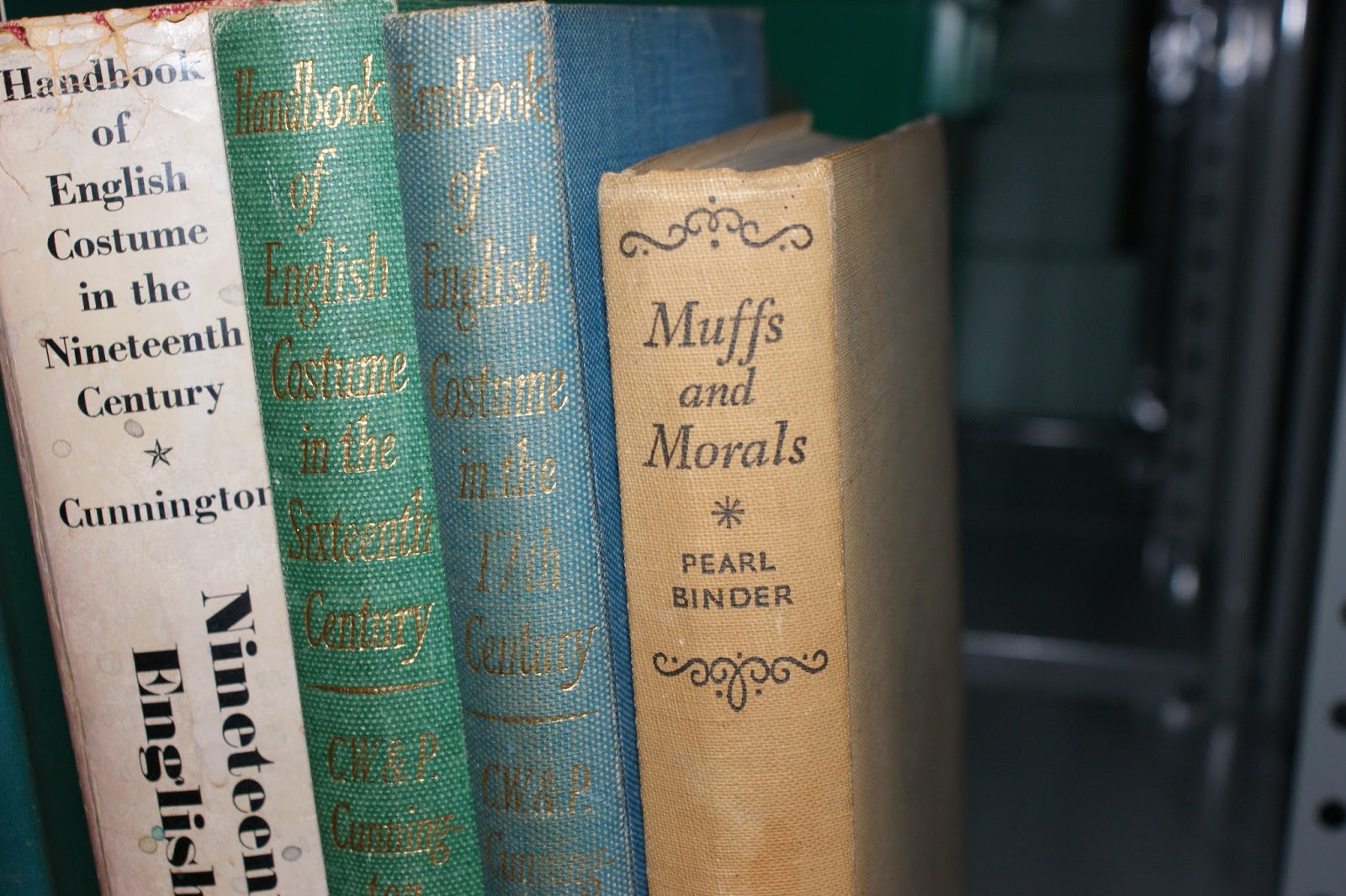
Pearl Binder's Muffs and Morals (George G. Harrap & Co, 1958) as part of our Faith Jaques book collection © Seven Stories The National Centre for Children's Books.
Back to Pearl Binder as children's illustrator - the second book I want to show you also begins far away from both Binder's life in East London and China. In 1963 she illustrated K. Goell's Pocahontas (Florence printed). 

Front cover of illustration proofs by Pearl Binder for K. Goell's Pocahontas (Florence printed, 1963)   Photograph © Seven Stories The National Centre for Children's Books. 
Back cover of illustration proofs by Pearl Binder for K. Goell's Pocahontas (Florence printed, 1963)   Photograph © Seven Stories The National Centre for Children's Books. 
This is a printed proof for the book's illustration and is wordless.  You don't need the words to interpret Pearl's depiction of Pocahontas. It showcases the same bold colour palette yet seems very different from Chi Ming and the Tiger Kitten.  

Wedding celebration double page spread from illustration proofs by Pearl Binder for K. Goell's Pocahontas (Florence printed, 1963)   Photograph © Seven Stories The National Centre for Children's Books. 

As well as illustrating this version of the story Binder also designed a musical based on the historical figure of Pocahontas for Joan Littlewood at the Theatre Royal Statford East (Tyne and Wear Archives and Museums). 

If you're interested in Pearl Binder Spitalfields Life gives a fantastic in depth account of her work and her attachment to the East End of London. As part of a series of blog posts about 'Everyman prints' Tyne and Wear Archives and Museums explore more of her life and work. Design for Today have also written an interesting blog post which includes the cover image for Puffin Picture Book Misha Learns English. 

If you'd like to find out more about the Seven Stories Collection, then 

email: collections@sevenstories.org.uk or phone: 0191 495 2707 or comment on this blog.


Wednesday, 26 November 2014

Charles Keeping's illustrations for 'The God Beneath the Sea' and 'The Golden Shadow'

Earlier this month we were delighted to receive into the Seven Stories Collection a fine set of signed Charles Keeping prints. These prints reproduce a selection of wonderfully dark illustrations made by Keeping for Leon Garfield and Edward Blishen's books, The God Beneath the Sea and The Golden Shadow. The prints were donated to Seven Stories by former school teacher and long-time supporter of Seven Stories, Nick Brown. Here Nick talks about how he came across the prints and the impact the work of Charles Keeping has had on him:

When I was training as a teacher in the early 70s, I came across The God Beneath the Sea by Leon Garfield and Edward Blishen. This retelling of some of the Greek myths was radically different from the ones we usually used on teaching practice by authors such as Roger Lancelyn Green, Barbara Leone Picard or even Andre Lang. I found the stories compelling and used some of them in my teaching.

Detail of Hades Chariot from The God Beneath the Sea. Image © Charles Keeping estate


Whilst the book itself received a mixed critical reception, this was not the case with the illustrations which were almost universally praised and, I suspect, contributed to it being awarded the Carnegie Medal in 1970. In addition, Keeping received a Kate Greenaway Commendation- an award that is no longer given. Interestingly, though, the U.S. edition does not feature Keeping's illustrations and I wonder if they were thought too "strong" for American sensibilities.


Copies of the books


But it isn't  the stories that have stayed with me, it's Charles Keeping's amazing illustrations that have resonated over the years. I was stunned by Keeping's illustrations so much so that when a portfolio of his illustrations for both The God Beneath the Sea and The Golden Shadow became available, I snapped it up. And they have remained with me ever since. I would take them out every so often and admire their power and violent beauty. I've enjoyed these prints for so many years that it seemed fitting to donate them to Seven Stories to add to their archive, where they could be viewed alongside the original Leon Garfield manuscripts.


Pages from Leon Garfield's notebooks for The Golden Shadow here at Seven Stories


On my visit to the Seven Stories Collection I was able to look through Leon Garfield's notebook that contain partial drafts of both novels. At this stage of writing, not surprisingly, there is no indication about illustrating them. It would be really interesting to find out when/how Keeping became a part of the process and how much freedom he had in deciding what to illustrate. But that is for another time.


Detail of punishment of Prometheus from The God Beneath the Sea. Image © Charles Keeping estate


It has to be remembered that whilst both books were promoted as suitable for older children,  one wonders if the illustrations are! Today, we see resonances of Keeping's work in that of Dave McKean (Coraline), Chris Riddell (The Graveyard Book) and Jim Kay (A Monster Calls). Keeping is crucial to our understanding of the development of post war children's book illustration and the illustrations for God Beneath the Sea and The Golden Shadow are an important part of this process.


Leon Garfield's notebooks for The Golden Shadow here at Seven Stories


Both books are lavishly illustrated. As in  most of Keeping's illustrative work, the illustrations are in black and white. They appear as half page and full page but also across a double page in a powerfully dynamic way. The illustrations don't simply accompany the text they propel us through the story. This  can be seen in his illustration of Hades' chariot in The God Beneath the Sea. And for a gruesome rendition of the punishment of Prometheus, we need go no further. Keeping's illustration of the dead Nemean lion is rather ambiguous.  After staring at it for a while it becomes less lionlike and more human. Or do I need an optician's appointment?


Dead Nemean lion from The Golden Shadow. Image © Charles Keeping estate


By Nick Brown

The Charles Keeping prints and the Leon Garfield collection are available to view by appointment at the Seven Stories Collections Department. To find out more about the Seven Stories Collection click here. To make an appointment to visit the Collection or to find out more about the collections featured in this post or other collections that we hold then click here to contact us.

Tuesday, 18 November 2014

Harold Jones's 'Lavender's Blue' comes to Seven Stories

To celebrate the recent arrival of Harold Jones's original illustrations for the classic volume of nursery rhymes, Lavender's Blue (1954), here is a special blog post all about the life and work of Harold Jones.


A chest painted by Harold Jones in his South London home


Harold Jones


Harold Jones (1904-1992) was a painter, wood engraver and printmaker, widely known as one of the twentieth century’s most significant and original illustrators of books for children. He began his career in the 1930s as a freelance illustrator and cover illustrator adding his distinctive style to many children’s books, including M. E. Atkinson’s Lockett series. Jones’s first picture book was a collaboration with the renowned children’s poet, Walter de la Mare which resulted in This Year, Next Year (1937). From then, until his death, Jones’s output was prolific and his idiosyncratic style remains instantly recognisable. His most notable and critically acclaimed work was, and remains, Lavender’s Blue (1954).


Artwork for This Year Next Year (1937), illustrated by Harold Jones, written by Walter De La Mare (Seven Stories Collection)

Ever since his early career Jones has won acclaim for his unique, seemingly simplistic, though haunting illustrations. His lithographs for This Year, Next Year marked him out as a fresh talent; the book itself received wide critical acclaim and was included in the First Editions Club’s annual exhibition of “the fifty books of the year”. Children’s book critic for The Times, Brian Alderson describes Jones as “the most original illustrator of the period” adding of Jones’s style:

‘On the surface… there seems to be only a rather stylised, rather wooden, rather traditional pictorialism. But within the hatched, pastel-shaded frames of his pictures there lurks a silent, eerie world – glimpsed or hinted at under the dark arches of the Serpentine bridge, in the eyes of a pensive dog, or behind a half opened door.’  (1)

Harold Jones had a broad range of artistic training before embarking on a career as an illustrator. He began with evening classes at Goldsmith’s College before moving on to Camberwell School of Arts and Crafts, where he studied under Albert Rutherston. He later studied at Royal College under Rutherston’s brother, William Rothenstein, and Arthur Rackham’s teacher, Edward Sullivan. Following his training Jones went on to teach. In 1930 he took a job as an art master at Bermondsey Central School for Boys. However, he quit the job in 1934 as it provided little outlet for his creativity. After leaving Bermondsey, Jones pursued work as a freelance illustrator whilst continuing to work as an art teacher. Between 1937 and 1940 he worked as a visiting lecturer at both the Ruskin School of Drawing in Oxford and the Chelsea School of Art. He also enjoyed a steady income from his work as a freelance illustrator; among other commissions, he illustrated the last three books written by H. G. Wells.


Some of the books illustrated by Harold Jones


During the Second World War, Jones worked for the Royal Engineers as a lithographic draughtsman. He ‘spent his days in a disused Pimlico garage drawing maps for the Supreme headquarters of the Allied Expeditionary Force. He used to recall how he had “the great fortune to draw the D-Day maps. We knew about everything months before the generals.”’ (2)

In 1945 Jones resumed teaching, taking up a post at Sunningdale School of Ballet, and continued to take commissions as an illustrator. The publication of Lavender’s Blue in 1954, and its wide and substantial critical acclaim, cemented his place as one of the foremost illustrators in Britain. In the proceeding decades he illustrated numerous picture books by various authors – generally favouring traditional, biblical and folkloric tales over more modern stories. In 1961 Jones gained further recognition when he was hired to illustrate the first children’s book published by the major British publishing house, Gollanzc: a new edition of Charles Kingsley’s The Water Babies. Throughout his career he also wrote and illustrated a number of his own stories including The Visit to the Farm (1939) and Enchanted Night (1947).


Harold Jones's studio at his South London home


Though foremost an illustrator, throughout his life Jones also continued to pursue an interest in fine art, producing a number of paintings. Both his art and his illustration have had significant appeal far beyond the world of children’s books, and the decorative and artistic merits of Jones’s work have been widely acclaimed:

His drawings function at a high level both spatially and decoratively, and at their best possess a quality of stillness and timelessness reminiscent of Italian quattrocento painting.’ (3)

While still a student, he sold his first picture in a Royal College of Art student exhibition to the influential art patron, Lady Ottoline Morrell. His work has been exhibited at venues including the Tate Gallery and the Royal Academy. Tate owns Jones’s early work ‘The black door’ which it purchased in 1940 and work by Jones featured in The Modern British Paintings, Drawings and Sculpture (Chamot, Farr and Butlin, 1964).


About Lavender's Blue


Copy of Lavender's Blue (Oxford: Oxford University Press, 1954) compiled by Kathleen Lines and illustrated by Harold Jones


Upon its release, Lavender’s Blue won substantial critical acclaim and its publication can be seen as something of a landmark in the history of children’s illustration. It received an honourable mention by the Hans Christian Andersen Award (this award remains the highest international recognition given to an author or illustrator of children’s books) and Jones was given a ‘special commendation’ by the British Library Association at the awarding of that year’s prestigious Carnegie Award. Though members of the Carnegie selection committee had for some time planned to introduce a separate illustration award, at this time there was still no major award honouring illustrators. However, it was decided that, due to the quality and originality of Jones’s illustrations, Lavender’s Blue deserved a high commendation and it is generally regarded that, had events ‘moved more quickly, [Jones] would have been the first recipient of the Kate Greenaway Medal’ – the illustration companion to the Carnegie award, introduced in 1956 (4). Since its establishment, the Kate Greenaway Medal (the first winner of which was Edward Ardizzone in 1956) has remained by far the most coveted award for illustration in Britain. On its release in the United States Lavender’s Blue was also met with strong critical praise. It received the American Library Association Award, and was included on the list of winners of the Lewis Carroll Shelf Award (5).


Artwork by Harold Jones for Lavender's Blue (1954)


First published by Oxford University Press in 1954, Lavender’s Blue is by far the most noted and celebrated of Harold Jones works. The book’s illustrations epitomise the seemingly bright and innocent, though slightly eerie style that sets Jones work apart. Each picture offers a world to explore full of rich depth and detail. As The Times Literary Supplement said of Jones at the time:

Among artists who specialise in books for children, Harold Jones is pre-eminent. Since Jean de Brunhoff’s incomparable Babar series, no artist has understood more successfully than he that a picture has little meaning for a child if he cannot step inside it.(6)

Lavender’s Blue was compiled by the noted librarian, critic and editor, Kathleen Lines who brought to the project her considerable knowledge and expertise on children’s literature. Lines had previously won acclaim for her critical survey of children's books, Four to Fifteen (1950) (also illustrated by Jones). Through her series of Fairytale Picture Books produced throughout the 1960s and 1970s, Lines would later go on to work with some of the leading children’s illustrators including Edward Ardizzone. The Times Literary Supplement noted of Kathleen Lines’s compilation of Lavender’s Blue that: ‘…as could be expected of someone so knowledgeable in the field of children’s books, [Kathleen Lines] has done her part with great thoroughness. No traditional favourite seems to be missing and sticklers can be sure, too, of finding the traditional verses.’ (7)


The Kathleen Lines book collection here at Seven Stories includes many of the books Lines used to research rhymes for Lavender's Blue


Throughout its 60 years, Lavender’s Blue has remained with Oxford University Press and enjoys the distinction of never once having been out of print. Rather uniquely, although the printing quality has varied, Jones’s original design of the book has never been substantially altered. In 2004, a special 50th anniversary edition was published which saw the book and its illustrations restored to their original quality.

Lavender’s Blue is still regarded as a classic by many children’s authors and illustrators working today. Former Children’s Laureate and author, Jacqueline Wilson, lists the book in her top ten all time children’s books. Of the illustrations, she has said: “[Harold Jones] uses a wonderful delicate colour palette of blue, sage green, lilac and apricot to create his own quirkily detailed dream-like world. You could pore over the pages every day for a year and still find fresh delights.” (8) The well renowned illustrator and author, Ian Beck, regularly cites Harold Jones as one of his foremost influences. He describes Jones illustrations as: “…never fail[ing] to delight. Even when tackling a simple line drawing of a water pump something delectable emerges. He would be my choice of desert island illustrator, even above Ardizzone.” (9)


The fantastic collection of artwork for Lavender's Blue came to Seven Stories in August to join our already significant collection of Jones's original illustrations. The purchase was made possible thanks to grants from ArtFund (http://www.artfund.org/) and the Arts Council England/Victoria and Albert Museum Purchase Grant Fund (www.vam.ac.uk/purchasegrantfund).
Harold Jones's Lavender's Blue illustrations will soon be available to view by appointment at the Seven Stories Collections Department. The work will also be featuring in future exhibitions at the Seven Stories Visitor Centre. If you'd like to know more about the Harold Jones Archive or work by other illustrators in the Seven Stories Collection then contact us.


Notes and references from the text:

1) Alderson, B., ‘Some notes on children’s book illustration 1915-1985’, in Horne, A. (ed), The Dictionary of 20th Century British Book Illustrators (Suffolk: Antique Collectors’ Club, 1994)

2) Harold Jones’s obituary, The Daily Telegraph (London, England), 13th June 1992

3) Peppin, B. (ed) and Micklethwaite, L. (ed), Dictionary of British Book Illustrators: twentieth century, (London: John Murray Publishers, Ltd., 1984)

4) Barker, Keith, In the Realms of Gold: the story of the Carnegie Medal, (London: Julia MacRae Books, 1986)

5) The Lewis Carroll Shelf Award (1958-1979) was an annual American literary award granted by the University of Wisconsin–Madison School of Education to books deemed to "belong on the same shelf" as Alice's Adventures in Wonderland and Through the Looking-Glass

6) Serraillier, Ian, ‘Pen, Brush and Pencil’, Times Literary Supplement, (London, England), 19th November, 1954

7) Dowding, K. M., ‘Rhymes and jingles’, Times Literary Supplement, (London, England), 19th November, 1954

8) Wilson, Jacqueline, ‘The great books giveaway’, The Guardian, (London: England), 4th March, 2011

9) ‘Harold Jones’ on Ian Beck’s blog – http://ianbeckblog.wordpress.com/2011/03/27/harold-jones-2/ (accessed 4th June 2014)

Friday, 7 November 2014

Edward Ardizzone artwork donation at the CILIP Youth Libraries Group conference

On 17th and 18th October I was delighted to attend the CILIP Youth Libraries Group, National Conference in Durham.  It was wonderful to meet so many enthusiastic Local Authority and School Librarians, who despite current financial challenges, are excited about children’s books and eager to enthuse their users about books and reading.  Over the two days, we were treated to a great line-up of speakers from the children's literature world including: authors such as Elizabeth Laird, Jackie Morris, and David Almond (all of whom are represented in Seven Stories’ archive collection); Prue Goodwin (lecturer and author of books about children’s literature); and Wendy Cooling (former head of the Children’s Book Foundation now known as ‘Book Trust’).


The magnificent Conference Gala Dinner was attended by a whole host of librarians, local dignitaries, publisher representatives, authors and illustrators.  Impassioned speeches about the importance of libraries were given by both Carnegie Medal 2014 winner author Kevin Brooks, and author Mal Peet (a former Carnegie medal winner).  During the proceedings I was presented, on behalf of Seven Stories, with a delightful piece of signed original artwork by Edward Ardizzone.  Apparently, in 1957, it was decided to have a special bookplate designed for items in the Library Association Youth Libraries Section (now known as CILIP Youth Libraries Group) collection.  Edward Ardizzone agreed to design the bookplate, and a fee of 10 guineas was accepted.


This is a lovely addition to our existing Ardizzone holdings which include artwork for two of his titles 'Tim in Danger', ’Tim and Charlotte' and his artwork for Graham Greene's, 'The Little Train'.

Tea and lunch breaks throughout the conference were sponsored by different Publishers during which delegates were treated to an amazing array of ‘book themed’ cupcakes!  One batch that particularly took my eye, were those provided by Macmillan Children's Books in celebration of eight titles in a new Classics edition, which include two titles by Ursula Moray Williams which are represented in our archive collection - Gobbolino the Witch’s Cat and Adventures of the Little Wooden Horse.


One of the conference Workshop sessions was led by Seven Stories, and centred on our recently announced book list, ‘Diverse Voices – 50 of the Best Children’s Books celebrating cultural diversity in the UK’.   Here are Debbie Beeks (Learning & Participation Manager) and Jake Hope (Freelance Children's Book Consultant) leading the workshop.


To find out more about ‘Diverse Voices’ and to see the list of 50 titles follow this link:


I thoroughly enjoyed my time at the conference and even came back to work with 48 Proof copies of books (due to be published in 2015) for our Staff Library as well!


By Paula Wride - Seven Stories Collections Officer


To find out more about the Seven Stories Collection click here. To contact us click here.