Showing posts with label books. Show all posts

Monday, 7 November 2016

David Almond Fellowships 2016/17


David Almond with Michael Morpurgo
David Almond; award-winning North East children’s writer, patron of Seven Stories, the National Centre for Children’s Books and honorary graduate of Newcastle University. It seems only fitting that we named our annual fellowships in children’s literature in David’s honour!
Newcastle University and Seven Stories’ David Almond Fellowships aims to promote high-quality research into the Seven Stories Collection by supporting award holders to make a study visit to Newcastle. And there are so many amazing collections that you could research! You can browse the blog for ideas or check out our collection highlights, catalogue and alphabetical list of represented authors and illustrators
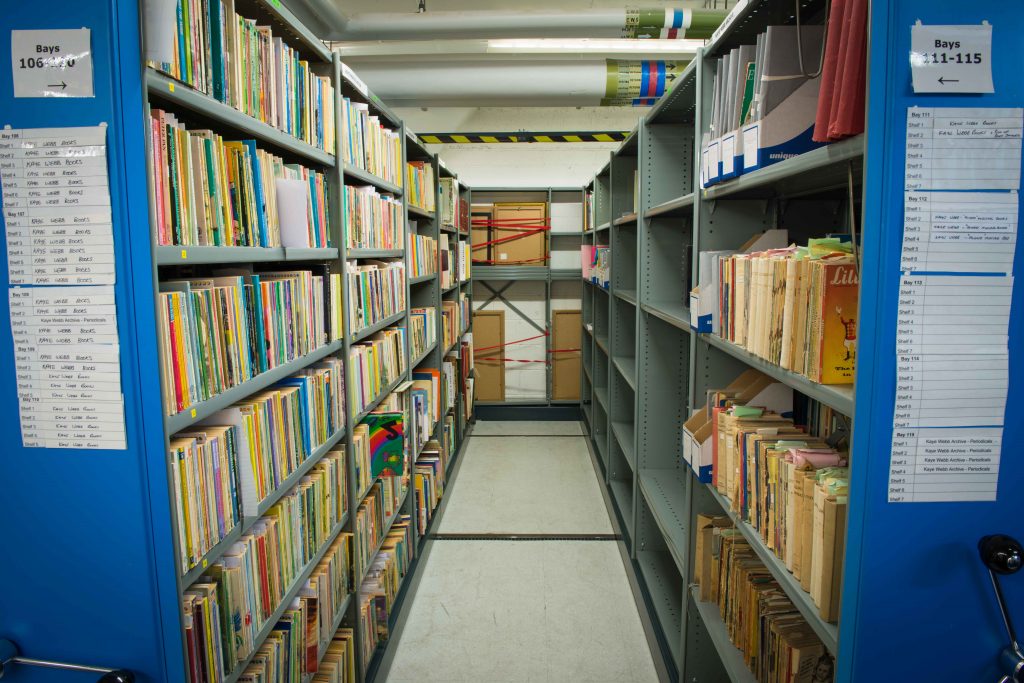
Collections at Seven Stories. Image: Seven Stories, the National Centre for Children's Books. Photography: Damian Wootten.
Seven Stories, the National Centre for Children’s Books. Photography: Damien Wootten

We launched the David Almond Fellowships in 2012 to increase national and international access to Seven Stories’ Collection and build new links with researchers. So far, we’ve awarded 11 Fellowships and over half of our Fellows have come from outside the UK.
Lucy Stone, one of our 2016 award-holders, says of her David Almond Fellowship:

“To take up the pen, pencil or paintbrush proffers the chance to make sense of the beautiful, but also perplexing world into which children are born, grow and find their place as an adult. The Judith Kerr Collection contains a myriad of remarkable drawings, paintings and writings child Kerr crafted pre- and during her family’s exile from Nazi Germany. Thanks to a David Almond Fellowship, I had the wonderful opportunity this summer to examine Kerr’s juvenilia, now part of my doctoral research involving consulting archives across Europe and the US to determine what writing and drawing can offer refugee children. Everyone at Seven Stories and the Children’s Literature Unit were incredibly helpful and supportive; the Fellowship proved invaluable.” 
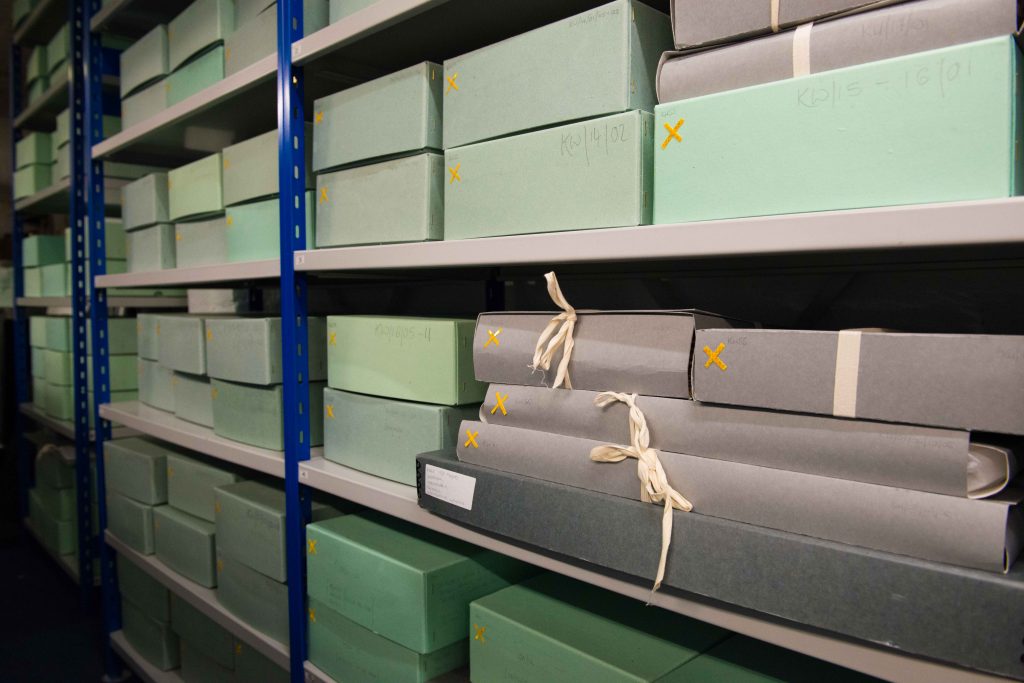
Collections at Seven Stories. Image: Seven Stories, the National Centre for Children's Books. Photograph: Damien Wootten.
Seven Stories, the National Centre for Children’s Books. Photography: Damien Wootten

And, applications for the 2016/17 David Almond Fellowships are now open! You have until 1 December 2016 to apply for visits to be taken before the end of August 2017. Have a look at the David Almond Fellowship Information 2016-2017 for full details of how to apply, and download the David Almond Fellowship Application form.

We would love to welcome you to Newcastle as a David Almond Fellow – and you could even research David’s collection…
For more information about the David Almond Fellowships, visit the School of English Literature, Language and Linguistics website or contact Professor Kim Reynolds.
- Rachel Smith, Vital North Partnership Manager 

Friday, 1 April 2016

All About: Time-slip

Since we've just changed the clocks and experienced our very own time-slip (be it only one hour forward), I thought we could investigate time travel as a mode of transport this month! I've chosen to look at Berlie Doherty's wonderful Children of Winter (Methuen, 1985), one of several time-slip titles that are represented in the Seven Stories' collection (more of these later). Berlie's collection (donated to Seven Stories, National Centre for Children’s Books in 2006 with an accrual received in 2009) consists of manuscripts, typescripts, draft material and related correspondence for 36 of her published works for children and for both of her adult novels. The collection also includes drafts and related material for several plays and radio broadcasts, and drafts of around 140 poems for adults and children, some apparently unpublished.

The files relating specifically to Children of Winter provide us with a fascinating record of the process of the writing, publishing and enduring impact of this book. Documents included are an early manuscript draft of the story, correspondence, reviews and press cuttings, educational resources, and even photographs taken on set during the filming of the Channel 4 dramatisation of the book. 

Covers of various editions (clockwise from top left) published by: Methuen, 1985 STSLS/01/241; Catnip, 2007 BD/09/04; Mammoth, 1995 BD/07/03; and Fontana Lions, 1986 NTL/03/119. Photograph © Seven Stories – The National Centre for Children’s Books

The idea for this story apparently came to Berlie while visiting Bowsen Barn, near High Bradfield, with a group of school children and writing ghost stories.  When Berlie asked the children who might have lived in the barn in the past one of the children suggested 'It could have been somebody sheltering from the Great Plague' and Berlie 'knew, straight away, that [she] was going to write a story about it'.  Berlie further describes Children of Winter as…

'... set at the time of the Great Plague in 1666, though it begins in the Derbyshire of today. It is loosely based on the story of the village of Eyam, not far from where I live, which lost half of its population to the plague. Eyam cut itself off from the rest of Derbyshire so that no other village would catch the Plague. In my story, three children are taken up to a barn, away from the village, and have to shelter there alone in order to survive. I tried to imagine what it would be like for them to have been so near home and yet not to be able to go there, and not to know what was happening to their family and friends in the village. It is about the Plague, but it could be about refugees from a war or from any kind of disaster. It’s about survival.'
(Extracts from Berlie Doherty’s website www.berliedoherty.com)

Berlie’s early manuscript drafts and notes for Children of Winter are written in two exercise books, under the story’s original title The Old Crook Barn.

Exercise books BD/01/02/01/01 and BD/01/02/01/02.  Photograph © Seven Stories – The National Centre for Children’s Books.

As well as numerous notes and drafts of the story, the exercise books contain a variety of other notes and lists, as well as drafts of several poems, and a partial draft of a story about Tilly Mint.

Exercise book BD/01/02/01/01 open at f31 showing early drafting and chapter planning.  Photograph © Seven Stories – The National Centre for Children’s Books
Exercise book BD/01/02/01/01 open at f33 showing early drafting and chapter planning.  Photograph © Seven Stories – The National Centre for Children’s Books

Berlie made few changes to her draft text in these exercise books but just occasionally she added in some beautiful descriptive text (apparently as it occurred to her) as here…

Exercise book BD/01/02/01/02 open at f26.  Photograph © Seven Stories – The National Centre for Children’s Books
We have one file of correspondence which relates to all aspects of the publication of Children of Winter including editorial changes, illustrations, dramatisation, reprints, contracts and royalties.  The file includes correspondence from: Jane Nissen and Miriam Hodgson (Berlie's successive editors at Methuen Children's Books); television / radio companies TVS, BBC and Carlton UK Television; and Murray Pollinger (Berlie's literary agent). The letter Berlie received from Jane Nissen below (BD/01/02/02/01 7th December 1983) is fascinating in that it shows the editor expressing interest in The Old Crook Barn but also raising concerns about the saleability of historical fiction, the time-slip element, use of colloquial /17th century English and similarities of the plot / theme (barn / plague / flashback) with Jill Paton Walsh’s book A parcel of patterns and Robert Westall’s Devil on the road.

Letter to Berlie BD/01/02/02/01 from Jane Nissen (Editor) Photograph © Seven Stories – The National Centre for Children’s Books.

In a letter dated 9th July 1984 Jane Nissen has obviously moved on from her original concerns about the plot theme and talks about commissioning Ian Newsham to illustrate the OLD CRUCK BARN (one of several variant spellings of the original title the more observant of you might notice!) and is anxious to get on with thinking of a new title (BD/01/02/02/04).  There are several more letters in this file which show how much Berlie and her editor discussed the detail in Ian Newsham’s illustrations, unlike many authors who seem to have little or no influence over the illustrations for their novels.


Berlie’s letter BD/01/02/02/05 to Angela Beeching and BD/01/02/02/08 to Jane Nissen © Seven Stories – The National Centre for Children’s Books

In the above letter to Angela Beeching dated July 13th 1984, we can see Berlie approaching Beeching with the idea of dramatising The Old Cruck Barn and even asking for an opinion about the title!  In her letter to Jane Nissen October 9th 1984 the final title Children of Winter has been agreed, and Berlie refers to discussions with the TV company about leaving the time-slip element out of their dramatisation entirely!  Thank goodness they didn't do that in the end!

Obviously when authors set their stories in the past (or travelling through time between the past and the present), it's important that they portray their settings accurately.  There's plenty of evidence within Berlie's archive of her carefully researching facts however, one letter, sent from a children's librarian, challenges her use of the name 'Tessa' as historically inaccurate! Unfortunately we don't have Berlie's response but interestingly, in the early drafts for this story the character did have a different name!  I'm intrigued as to why Berlie renamed this character and if you'd like to find out what her draft name was, you'll just have to visit us! 

The correspondence file also includes a small amount of letters from fans and school children including this lovely letter and a coloured version of the map drawn by another child who was clearly inspired by the map which appears in various editions of the book.


BD/01/02/02/31 Photograph © Seven Stories – The National Centre for Children’s Books
 BD/01/02/02/42 with Methuen edition of Children of winter, 1985 STSLS/01/241 Photograph © Seven Stories – The National Centre for Children’s Books

There's also a file of reviews and newspapers cuttings relating to Children of Winter, a few of which have been pasted onto card as well as a file of educational resources for teachers relating to both the book and radio broadcasts of Children of Winter.


Photos above show BD/01/02/03/04 and BD/01/02/03/05 and copies of: Author Focus: General Approaches plus Berlie Doherty and Children of Winter, Staffordshire County Council, 2000; and the teachers' notes to accompany the radio broadcasts of Children of Winter published by the BBC in 2003. BD/01/02/04.  Photograph © Seven Stories – The National Centre for Children’s Books


And to top things off nicely, there's even a set of colour photographs taken (perhaps by Berlie herself) on location during the filming of Channel 4's dramatisation of Children of Winter, which first aired in 1994.  The photographs include landscape shots and pictures of the cast and crew.
    

BD/01/02/05 Photograph © Seven Stories – The National Centre for Children’s Books
And finally, here's a letter from Berlie to the local Council raising concerns about an act of vandalism that occurred to the very real Bowsen Barn which inadvertently reveals details about just how far Children of Winter has endured in terms of foreign editions, reprints, TV and radio programmes as so on.

BD/01/02/02/21 Photograph © Seven Stories – The National Centre for Children’s Books

If you are as intrigued about the idea of 'time travel' as I am, you might like to know that other time-slip titles represented in Seven Stories' collection include: Peter Dickinson's Mandog; Philippa Pearce's Tom's midnight garden; Ursula Moray Williams’ Castle Merlin; and Lucy M Boston's The Stones of Green Knowe.  For further information about Berlie Doherty's archive and all these others, please view our online catalogue

     - Paula Wride (Collection Officer).


If you'd like to find out more about the Seven Stories Collection, then 

email: collections@sevenstories.org.uk or phone: 0191 495 2707 or comment on this blog.

Monday, 1 February 2016

All About: Castles

If I were going to spend a weekend in the magical world of Ingary I’d want to travel in comfort.  It’s quite far from here so I’d have to think carefully of how I’d make my way. I’d definitely travel by CASTLE.  This week we’re going to dip into our Diana Wynne Jones collection and look at that most inventive and smoke-belching mode of transport: a castle, Howl’s Moving Castle, to be specific.  


[Howl’s castle] suddenly appeared on the hills above Market Chipping, blowing clouds of black smoke from its four tall thin turrets…what made it all the scarier was that the castle did not stay in the same place…You could see it moving sometimes, with smoke pouring from its turrets in dirty gray gusts (Extract from Jones' Howl's Moving Castle, p.2, Methuen, 1986).

Inside this Castle that clunks and smokes through the wastes is a rugby-obsessed Welsh wizard called Howl, his fiery fire-spirit Calcifer and the unsuspecting companion in these adventures, the hat-maker’s apprentice, Sophie. 

This is a story about growing up. Sophie is transformed into an old woman by the powerful Witch of the Waste and leaves the hat shop to find work as a cleaner for the notorious wizard Howl.  The castle is where Sophie learns not only about Howl's unwillingness to clean but about her own magical abilities.  It may sound cliché but the Castle opened up a journey of discovery for Sophie.  In her home of Market Chipping she was a cooperative and compliant young girl who later emerges from the castle as a strong, confident old lady (old until the curse is lifted but still confident).  Diana Wynne Jones believed that all children should be encouraged to discover their own individuality, rather than being expected to follow the rules (Seven Stories Moving Stories text panel). Sophie certainly discovers her individuality on the journey and doesn't quite follow the rules. Howl was rumored to be terrifying - probably somebody a young girl should try to avoid and escape not seek employment from.

[Howl] was known to amuse himself by collecting young girls and sucking the souls from them.  Or some people said he ate their hearts.  He was an utterly cold-blooded and heartless wizard and no young girl was safe from him' (Extract from Jones' Howl's Moving Castle, p.3, Methuen, 1986).

Sophie was not exactly a young girl, thanks to the Witch's curse, but her physical transformation from young to old mirrors a transformation of character.  She grows into a person who is no longer resigned to her fate in a hat shop but who controls her own destiny.  

Howl's Moving Castle area of the Moving Stories exhibition which came to a close in 2015Photography by Damien Wooten © Seven Stories – The National Centre for Children’s Books
It doesn’t exactly seem to be environmentally friendly, but Howl’s Castle allows him to move between worlds. It is his home and his transport. The castle has taken many forms with the Studio Ghibli re-imagining becoming somewhat iconicStudio Ghibli adapted Howl’s Moving Castle for the screen in 2004. The co-founder of the studio, director Hayao Miyazaki's personal views on environmentalism, pacifism and feminism have a strong influence upon his work. So, a wheezing castle and Sophie's personal journey seem an ideal choice for the Studio however, Miyazaki's adaptation shows significant differences to the book. Prior to the release of the film,  Miyazaki visited Jones at her home to watch the film with her.  About the Japanese director she said "I don't think I've ever met anyone before who thinks like I do. It was wonderful. He saw my books from the inside out."

Diana Wynne Jones is represented in many of our book collections; you can almost always count on finding her name in former public library collections. We have two different versions of Howl's Moving Castle and this cover from the Indonesian edition shows a very different portrayal to the wooden-faced castle of Studio Ghibli. I can understand how a Castle running through the hills like it has spontaneously uprooted and grown legs would have been very frightening to those in the Ingary town of Market Chipping. 

Indonesian edition of Howl's Moving Castle.  Reference: DWJ/06/01/18 © Seven Stories – The National Centre for Children’s Books

The second version features my favourite book cover of all time: it's Howl, with his precious blonde mane and his electric guitar.  For me, this cover embodies some of the humour of Jones’ writing even though Howl isn’t quite as I had imagined and Calcifer is nothing short of terrifying (I have to admit to my fandom of Hayao Miyazaki's much more lovable fire spirit). An online search for Howl's Moving Castle book covers reveals so many different editions each with wonderful artwork - if you own a different copy, I would love to see it!  You can leave a picture in the comment section, or tweet us at @7Stories

Howl's Moving Castle Reference: STSLS/01/451 © Seven Stories – The National Centre for Children’s Books
Jones is widely recognised among scholars, writers and fans of science fiction and fantasy as a truly ground-breaking writer so it's not surprising that her collection is one of our most popular among researchers. In 2014 Seven Stories and Newcastle University hosted a memorial conference for Jones, as a celebration of her work and an evaluation of her contribution to children’s literature, fantasy and science fiction. 

Archival material in our collection includes stories written by Jones as a child; draft material for 49 published works; material relating to numerous unpublished works; correspondence and fan-mail.  

Only a small proportion of material relates to Howl’s Moving Castle with two files containing typescript drafts.  One of which is a setting draft, marked up with typesetting instructions for the printer.  The annotations on this draft mostly refer to formatting amendments for the printers, however some do refer to language use for American editions of the book. 

Setting copy transcript.  Reference: DWJ/02/01/01/02 © Seven Stories – The National Centre for Children’s Books

The  second typescript came to us in a brown envelope with a scrawled label reading  'Howl minus by Miriam'.  This draft is what Howl's Moving Castle could have looked like if Diana's editor Miriam had had her way. The draft was sent to Laura Cecil, Diana’s agent, who gave the following explanation when the collection was donated:

This was a joke version of an edited HOWL sent to Laura Cecil by an exasperated Diana Wynne Jones, showing in a reductio ad absurdum version what would happen if she followed Miriam Hodgson’s editorial comments to the letter.  Neither Miriam nor anyone else at Methuen knew about this version.  It was part of Diana’s way of letting off steam when she was having to fight her corner with publishers.  Later on she and Miriam had a very good relationship, but it took some time for her to understand Diana’s work.


Howl minus by Miriam draft.  Reference: DWJ/02/01/01/01© Seven Stories – The National Centre for Children’s Books
The version is incomplete and the majority of red-ink annotations are suggestions for rephrasing and sentence deletions. As an example here is a change made in chapter thirteen 'In which Sophie blackens Howl's name' 


and another from the end of Chapter 10 'In which Calcifer promises Sophie a hint'


These changes aren't huge or structural, they don't change the story but their frequency would change the flow of the book.  So, this typescript is Jones' reaction to edits that she thought would flatten and oversimplify her language.  Judging from her strong presence in our book collections, numerous translated editions and a Japanese film adaptation, Jones' book has clearly had great success without these particular amendments

I may not be able to guarantee that a castle is an efficient mode of transport (with all the billowing smoke and terrified reactions it may not be worth it).  What I can guarantee is that Howl's Moving Castle is an excellent read and our collections shed some light on the stages of its creation, and Diana's popularity as an author.


If you'd like to find out more about the Seven Stories Collection, then 

email: collections@sevenstories.org.uk or phone: 0191 495 2707 or comment on this blog.


Monday, 10 August 2015

Ann numbers and remembers


We are very lucky to have some fantastic volunteers working with our collections team on our archive and book collections.  Ann is one of our regular volunteers who is helping to number our enormous and ever-growing book collection; so far, the books numbered by Ann are in the thousands and span a large number of our collections.  Not only is she a pro at wielding a 2B pencil but she is also our star at crafting purpose-made archive-standard wrappers for board books and a regular face at our Carnegie and Kate Greenaway shadowing groups.  Ann wrote us an account of her experience with our books from the Lit and Phil Collection which consists of books withdrawn from the Literary & Philosophical Society in Newcastle.


Volunteering for Seven stories you never know when the unexpected is going to hit you and send you spinning back in time to your own childhood.  My task was to number children’s books from the Lit & Phil Collection.  I had expected it to contain the usual classics Ivanhoe, Robinson Crusoe, even What Katy Did but here were Sue Barton, Student Nurse by Helen Dore Boylston, Return to the Wells by Lorna Hill and The Young Traveller series. 


The cover of the Young Traveller in Greece by Geoffrey Trease immediately transported me back to Berwick-upon-Tweed children’s library in the 1950’s eagerly clutching the latest arrival in the series.  At a time when international travel was rare, here was a way to lose oneself in the life and culture of other worlds.


Other discoveries among the Lit and Phil gems were the composer series by Opal Wheeler and Sybil Deucher published by Faber and Faber which told the lives of composers such as Haydn, Mozart and Schubert amongst others, interspersed with extracts from their music.  These were presented in an attractive way, informative but not condescending.


Reluctantly I dragged myself back to numbering 001, 002, 003…

If you'd like to know more about the volunteering opportunities at the Seven Stories Collection let us know via collections@sevenstories.org.uk 

If you'd like to find out more about the Seven Stories Collection, then 
email: collections@sevenstories.org.uk or phone: 0191 495 2707 or comment on this blog.

Friday, 7 November 2014

Edward Ardizzone artwork donation at the CILIP Youth Libraries Group conference

On 17th and 18th October I was delighted to attend the CILIP Youth Libraries Group, National Conference in Durham.  It was wonderful to meet so many enthusiastic Local Authority and School Librarians, who despite current financial challenges, are excited about children’s books and eager to enthuse their users about books and reading.  Over the two days, we were treated to a great line-up of speakers from the children's literature world including: authors such as Elizabeth Laird, Jackie Morris, and David Almond (all of whom are represented in Seven Stories’ archive collection); Prue Goodwin (lecturer and author of books about children’s literature); and Wendy Cooling (former head of the Children’s Book Foundation now known as ‘Book Trust’).


The magnificent Conference Gala Dinner was attended by a whole host of librarians, local dignitaries, publisher representatives, authors and illustrators.  Impassioned speeches about the importance of libraries were given by both Carnegie Medal 2014 winner author Kevin Brooks, and author Mal Peet (a former Carnegie medal winner).  During the proceedings I was presented, on behalf of Seven Stories, with a delightful piece of signed original artwork by Edward Ardizzone.  Apparently, in 1957, it was decided to have a special bookplate designed for items in the Library Association Youth Libraries Section (now known as CILIP Youth Libraries Group) collection.  Edward Ardizzone agreed to design the bookplate, and a fee of 10 guineas was accepted.


This is a lovely addition to our existing Ardizzone holdings which include artwork for two of his titles 'Tim in Danger', ’Tim and Charlotte' and his artwork for Graham Greene's, 'The Little Train'.

Tea and lunch breaks throughout the conference were sponsored by different Publishers during which delegates were treated to an amazing array of ‘book themed’ cupcakes!  One batch that particularly took my eye, were those provided by Macmillan Children's Books in celebration of eight titles in a new Classics edition, which include two titles by Ursula Moray Williams which are represented in our archive collection - Gobbolino the Witch’s Cat and Adventures of the Little Wooden Horse.


One of the conference Workshop sessions was led by Seven Stories, and centred on our recently announced book list, ‘Diverse Voices – 50 of the Best Children’s Books celebrating cultural diversity in the UK’.   Here are Debbie Beeks (Learning & Participation Manager) and Jake Hope (Freelance Children's Book Consultant) leading the workshop.


To find out more about ‘Diverse Voices’ and to see the list of 50 titles follow this link:


I thoroughly enjoyed my time at the conference and even came back to work with 48 Proof copies of books (due to be published in 2015) for our Staff Library as well!


By Paula Wride - Seven Stories Collections Officer


To find out more about the Seven Stories Collection click here. To contact us click here.

Friday, 31 October 2014

Spooky goings on in Store

To celebrate the first Halloween we have had since the Collections Blog began, we have pulled out some of our favourite spooky items from the archive. We present you with a mix of eery illustrations, terrifying typescripts and disquieting dummy books - enjoy!


Original artwork by Anthony Maitland for 'The Ghost of Thomas Kempe', by Penelope Lively, 1973

© Anthony Maitland
Typescript page from 'Howl's Moving Castle' by Diana Wynne Jones, Methuen 1986

© Diana Wynne Jones Estate
Typescript page for 'The Haunting of Hiram C. Hopgood' by Eva Ibbotson, 1987

© Eva Ibbotson Estate
Finished artwork by Gillian McClure for 'Tog the Ribber' written by Paul Coltman, Andre Deutsch 1985

© Gillian McClure
Page from dummy book by Helen Craig, for 'Angelina at the Fair', written by Katharine Holabird, Aurum Press 1985

© Helen Craig
Letter from Jill Murphy, author of 'The Worst Witch', to Kaye Webb, editor of Puffin Books, c. 1982

©Jill Murphy 
Print by Jan Pieńkowski, commissioned by Seven Stories for the launch of the visitor centre in 2005

© Jan PieÅ„kowski
Final illustrations for 'Gobbolino, the Witch's Cat', by Ursula Moray Williams, 1942

© Ursula Moray Williams Estate

To find out more about the terror-ific goings on at Seven Stories this Halloween, click here.


If you'd like to find out more about the Seven Stories Collection, then 
email: collections@sevenstories.org.uk or phone: 0191 495 2707 or comment on this blog.