Showing posts with label archive. Show all posts

Tuesday, 22 November 2016

#HairyArchive Bears

It is #ExploreArchives week and to help explore#archiveanimals our KTP Associate Dr Jessica Medhurst discusses bears at Seven Stories and bears in children's books. 

In February 2017 Seven Stories will be opening a new exhibition all about bears in children’s books, which means the exhibitions team is hard at work at the moment reading books about bears, choosing items from the archive to go in it and speaking to authors and illustrators about their work on bears.

For my part I’ve been doing a bit of digging into the history of bears in literature and culture more widely, including the Aesop’s fable ‘The Travellers and the Bear’ (moral: be careful who you hit the road with), cartoon bears (Rupert, Biffo and Yogi), Shakespeare’s famous stage direction ‘Exit, pursued by bear’, and family favourites such as Winnie the Pooh (1926, Methuen) and Paddington Bear (Collins, 1958).

Original artwork by Robert Ingpen of the Hundred Acre Wood, from the well known series Winnie the Pooh written by A.A. Milne.  Photograph © Seven Stories, The National Centre for Children's Books


The association between bears and childhood seems to be an obvious one, perhaps in part because so many of us had (or have) teddy bears of our own.  But how did we come to turn this ferocious animal into a cuddly toy that’s our bedtime protector from bad dreams and the dark?  And what other kinds of bears do we find in children’s books?

Teddy bears began their history outside of books as an early twentieth-century phenomenon and were developed simultaneously, in about 1905, in both America (by the Michtom family, named after Teddy Roosevelt) and Germany (by the Steiff company who had been making increasingly elaborate animal-shaped pin cushions for a couple of years).  They entered into wider culture quite quickly: within 2 years the instrumental version of ‘The Teddy Bear’s Picnic’ was composed (in 1907 – the lyrics were added in 1932) and in 1926 Winnie-the-Pooh was published, cementing the place of the cuddly bear in children’s books.

Teddy bears are now a common attachment toy in the UK but what do you do when it’s a bear that needs comforting, rather than a child?  That’s the problem addressed in Martin Waddell and Barbara Firth’s Can’t You Sleep Little Bear? (1988, Walker).  In a bit of a role reversal, Firth’s illustrations of Little Bear’s attachment toys look rather human, although it takes much more than a couple of toys to get him to sleep.

Original artwork by Barbara Firth for 'Can't You Sleep Little Bear' (Walker, 1989), written by Martin Waddell.  Photograph © Seven Stories, The National Centre for Children's Books

The bears in Can’t You Sleep Little Bear? live in a cave but are very domesticated (they have furniture and Big Bear is trying – desperately – to finish his book) but not all bears in books are safe and cuddly.

Michael Rosen and Helen Oxenbury’s We’re Going on a Bear Hunt (1989, Walker), which is based on an American folk song, doesn’t involve guns or traps but the bear at the end scares the family enough that they run home and hide in bed.  As you can see from this draft, the text is quite simple but it’s what’s not being said that tells us more.  

Michael Rosen's annotated typescript draft of Michael Rosen and Helen Oxenbury’s We’re Going on a Bear Hunt (1989, Walker). Photograph © Seven Stories, The National Centre for Children's Books

Michael’s scribbled directions come out in Helen’s illustrations and also his magnificent performances, like this one.

Of course, sometimes the humans in the book deserve what’s coming to them, such as in the fairy tale Goldilocks and the Three Bears.  I was surprised to learn that neither the Grimm brothers nor Hans Christian Anderson recorded this story – the earliest known version is by the Poet Laureate Robert Southey from 1837 (pp318-326 here, with fabulous fonts for each of the bears), although it’s very likely that it will have been told – and perhaps even published – before then.  

Ladybird Edition of Goldilocks and the Three Bears (c. 1972)

Like all fairy tales it’s been retold ever since, with authors changing Southey’s old lady Silver-Hair to a young girl Goldilocks by the end of the nineteenth century.  The fairytale has had the Ladybird book treatment more than once, such as the 1972 version above, and  Harold Jones illustrated Kathleen Lines’ Jack and the Beanstalk, A Book of Nursery Stories (OUP, 1960), as you can see in the dummy book below. As in Can’t You Sleep Little Bear the bear family here are a bit like hairy humans – in fact they’re perhaps better at being human than the thieving Goldilocks.

Original dummy book artwork by Harold Jones for his 'Jack and The Bean Stalk' (

Oxford University Press, 1960) edited by Kathleen Lines. Photograph © Seven Stories, The National Centre for Children's Books


The relationship between bears and humans in children’s books is by no means straightforward, something the exhibition’s curators are getting their (human) teeth into.  Sometimes the bears are ferocious, as in Little House in the Big Woods, sometimes they’re cozy toys, as in Winnie-the-Pooh, and sometimes they’re a mixture of wild and protector, as is the case with Philip Pullman’s Iorek Brynison in the His Dark Materials books.
 
All these bears and more will be explored in the ‘Bears!’ exhibition; in the meantime, we want to know who your favourite book bears are.  Do you agree with this Top Ten or is Hugless Douglas a family fave? 

A 1922 Edition of  Rudyard Kipling's Jungle Book (Macmillan and co)

What about Baloo, Albert Bear or John Betjeman’s faithful friend Archibald?  You can leave your recommendations in the comments below.

Monday, 7 November 2016

David Almond Fellowships 2016/17


David Almond with Michael Morpurgo
David Almond; award-winning North East children’s writer, patron of Seven Stories, the National Centre for Children’s Books and honorary graduate of Newcastle University. It seems only fitting that we named our annual fellowships in children’s literature in David’s honour!
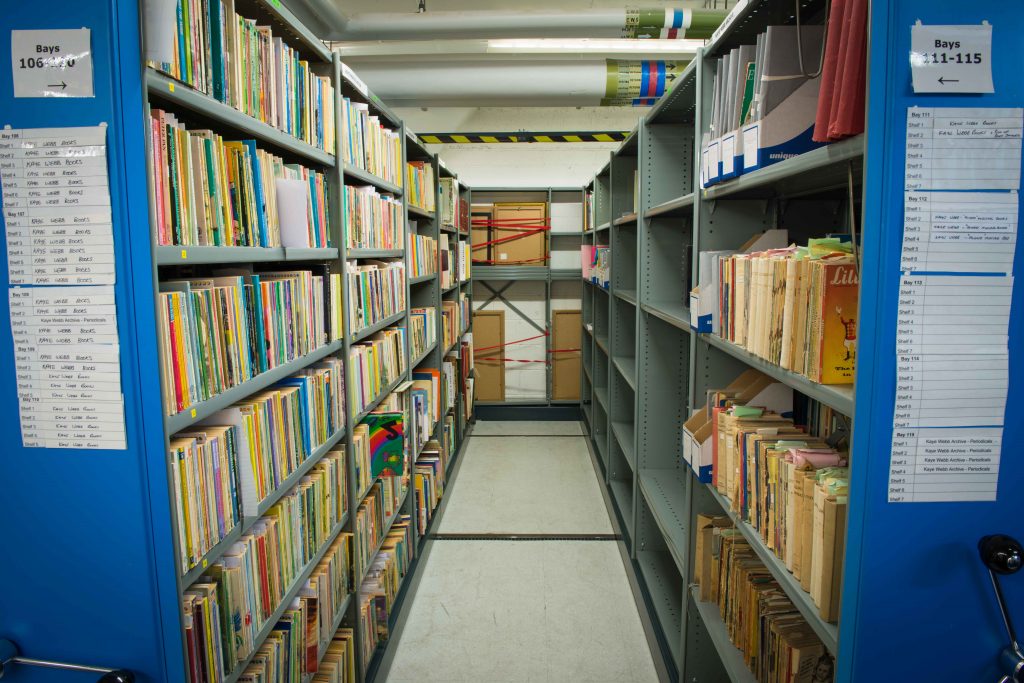
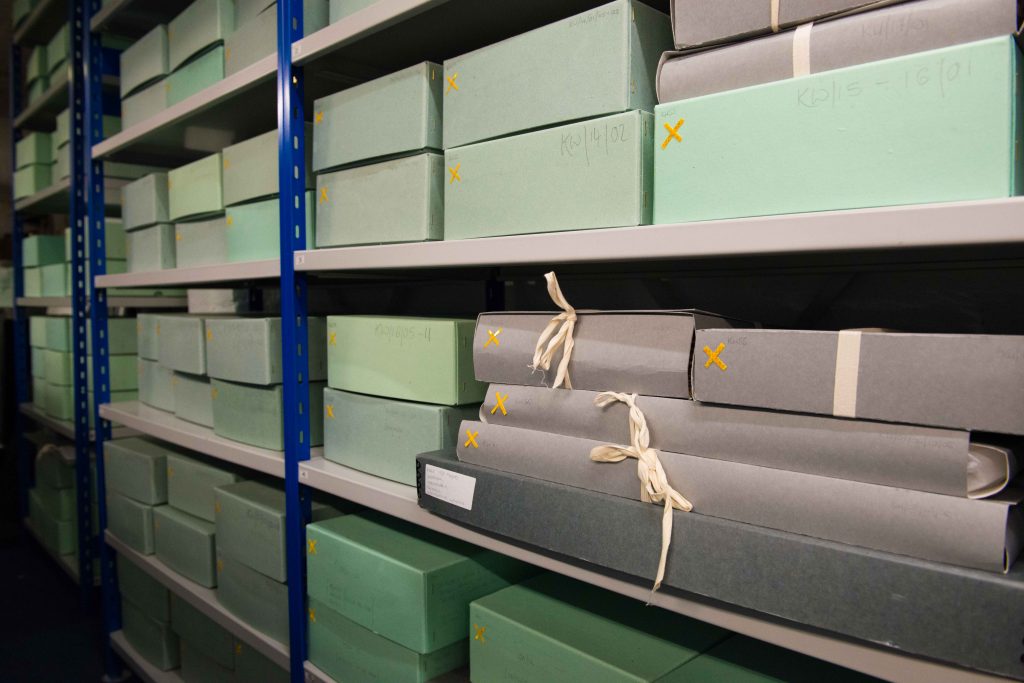
Newcastle University and Seven Stories’ David Almond Fellowships aims to promote high-quality research into the Seven Stories Collection by supporting award holders to make a study visit to Newcastle. And there are so many amazing collections that you could research! You can browse the blog for ideas or check out our collection highlights, catalogue and alphabetical list of represented authors and illustrators
Collections at Seven Stories. Image: Seven Stories, the National Centre for Children's Books. Photography: Damian Wootten.
Seven Stories, the National Centre for Children’s Books. Photography: Damien Wootten

We launched the David Almond Fellowships in 2012 to increase national and international access to Seven Stories’ Collection and build new links with researchers. So far, we’ve awarded 11 Fellowships and over half of our Fellows have come from outside the UK.
Lucy Stone, one of our 2016 award-holders, says of her David Almond Fellowship:

“To take up the pen, pencil or paintbrush proffers the chance to make sense of the beautiful, but also perplexing world into which children are born, grow and find their place as an adult. The Judith Kerr Collection contains a myriad of remarkable drawings, paintings and writings child Kerr crafted pre- and during her family’s exile from Nazi Germany. Thanks to a David Almond Fellowship, I had the wonderful opportunity this summer to examine Kerr’s juvenilia, now part of my doctoral research involving consulting archives across Europe and the US to determine what writing and drawing can offer refugee children. Everyone at Seven Stories and the Children’s Literature Unit were incredibly helpful and supportive; the Fellowship proved invaluable.” 
Collections at Seven Stories. Image: Seven Stories, the National Centre for Children's Books. Photograph: Damien Wootten.
Seven Stories, the National Centre for Children’s Books. Photography: Damien Wootten

And, applications for the 2016/17 David Almond Fellowships are now open! You have until 1 December 2016 to apply for visits to be taken before the end of August 2017. Have a look at the David Almond Fellowship Information 2016-2017 for full details of how to apply, and download the David Almond Fellowship Application form.

We would love to welcome you to Newcastle as a David Almond Fellow – and you could even research David’s collection…
For more information about the David Almond Fellowships, visit the School of English Literature, Language and Linguistics website or contact Professor Kim Reynolds.
- Rachel Smith, Vital North Partnership Manager 

Friday, 13 May 2016

Pearl Binder: from the East End to Hong Kong and North America.

Within our collections at Seven Stories, the National Centre for Children's books, we have collections that you might expect to find - Philip Pullman, Diana Wynne Jones, Judith Kerr, David Fickling, Michael Morpurgo - but we also have some unexpected but equally brilliant collections.  Pearl Binder wasn't primarily a children's book illustrator; she was known as a writer, artist and television personality, as well as being a sculptor and stained glass artist with an interest in fashion. She is a fascinating character and we're lucky enough to have material which relates to her role as children's book illustrator.

Binder was born in Salford but moved to London after the first world war to study at the Central School of Art and Design.  She settled in East London in the 1920's and the area features prominently in her work; Pearl illustrated Thomas Burke's The Real East End (Constable, 1932) and was an advocate of the Pearly Kings and Queens.   

Included in her achievements are her Pearly mug for Wedgewood, her work with Amal Gosh and City Literary Institute's stained glass evening class to design and make armorial windows for the house of Lords, and her involvement in the early days television broadcasting (British Museum: bibliographical details). According to Project Gutenberg she may have been the first heavily pregnant woman to appear on television . And, of course, because this is a Children's Literature blog another achievement to celebrate is Binder's Puffin Picture Book Misha Learns English (Puffin, 1942).

Though our collection of her material is small (all of two items!) it is still worth a blog post. The first item is her dummy book for Chi Ming and the Tiger Kitten (Dobson books, 1964) written by Binder's daughter Josephine Marquand. 

Dummy book dedication and title page by Pearl Binder for Chi Ming and the Tiger Kitten (Dobson books, 1964).  Photograph © Seven Stories The National Centre for Children's Books. 

Chi Ming and the Tiger Kitten is the first in a series of collaborations between Binder and Marquand about the little boy Chi Ming who lives on Hong Kong Island.  Interestingly, Binder was an adventurous traveller, with a particular interest in visiting and writing about China (Spitalfields Life). Whilst illustrating Chi Ming and the Tiger Kitten Pearl was living with her daughter Josephine Marquand in Hong Kong. 

Chi Ming and the Tiger Kitten is a story with many nuances, and a subtly educational feel. In 1964 Hong Kong was under British sovereignty so, Chi Ming and the Tiger Kitten  provides an insight into the Chinese culture of a region under British administration.  The book is beautifully detailed and tells the story of  a small boy, Chi Ming, and his family who are fruit sellers. 

Ladder Street was not really a ladder but a flight of grey stone steps running between two rows of crumbling houses on the island of Hong Kong.  At the top of the steps grew a very old Tree of Heaven, which burst into scarlet blossom every summer 
(Chi Ming and the Tiger Kitten, dummy book). 

Ladder street is set on a real street in Sheung Wan and the Tree of Heaven has a long history in Chinese culture - for medicine and as a metaphor (a father figure as a fully developed tree and a spoiled child a stump). 


Ladder Street in the typhoon.  Dummy book by Pearl Binder for Chi Ming and the Tiger Kitten (Dobson books, 1964).  Photograph © Seven Stories The National Centre for Children's Books. 

Dummy book. by Pearl Binder for Chi Ming and the Tiger Kitten (Dobson books, 1964).  Photograph © Seven Stories The National Centre for Children's Books. 

In the story the families of the street are so poor that they sleep under their stalls, and during a typhoon Chi Ming's family suffer the destruction of their canvas awning.  They also experience something that could only be lucky according to Chi Ming's uncle The Great-Uncle Ma.  It is the year of the Tiger and what should fall on Chi Ming's shoulder but a tiger kitten with five stripes? Five being a lucky number in Chinese culture, and associated with the five elements. 

Once the storm is over the family discover that the kitten belongs to the son of a very rich family.  Ma encourages Chi Ming to give the kitten back to the son despite Chi Ming's attachment to the kitten. As a reward for returning the kitten Chi Ming is asked what he would like. Nothing could replace the kitten so he asks for a replacement canvas for his family's stall.  

Though initially jealous of the tiger kitten's attachment to Chi Ming - a kitten that seems to favour the kind by sitting on their shoulder and purring - the young rich boy offers Chi Ming another gift out of kindness.  Perhaps the Tree of Heaven overlooking this story is a metaphor; we have both the guiding and steady figure of wisdom, The Great Uncle Ma, who encourages Chi Ming to do the right thing, and the spoiled child who learns to be kind and giving. 

This second gift is 'an enormous paper lantern in the shape of a white carp, with pink scales and red fins, a scarlet tail and curling yellow whiskers'  which enables Chi Ming to lead the Ladder Street children in the Moon Festival lantern parade. (Pearl Binder's dummy book for Chi Ming and the Tiger Kitten)


The Moon Festival double page spread. Dummy book by Pearl Binder for Chi Ming and the Tiger Kitten (Dobson books, 1964).  Photograph © Seven Stories The National Centre for Children's Books. 
The moon festival is the second largest festival in the Chinese lunar calendar. The festival celebrates three fundamental concepts: gathering, thanksgiving and praying. These three concepts also guide the plot of Chi Ming and the Tiger Kitten. Chi Ming's family and neighbours gather together in the aftermath of the storm, they are thankful for their luck and fortune in finding the kitten which enables them to fix the damage done by the storm and, at the very beginning of the story, Chi Ming visits the Temple to pray to Kuan Yin, the goddess of Mercy, to keep his family safe.  

Details of the Moon Festival; Chi Ming, the Great-Uncle Ma and the carp lantern. Dummy book by Pearl Binder for Chi Ming and the Tiger Kitten (Dobson books, 1964).  Photograph © Seven Stories The National Centre for Children's Books. 

As you can see the illustrations in the dummy book are rough but stunning.  If you look closer there is so much texture and detail to her work.  Binder has used a variety of techniques on separate pieces of paper and brings these together as a dummy book.  There has been careful attention to word placement with individual words being cut and pasted into place.  In places the text has also been annotated and ammended.

There are a variety of pen sketches and full colour spreads.  The coloured double page spreads are particularly stunning. They're so vibrant - with washes that sometimes overcome Binder's ink sketches.  These are usually mixed media - strong washes, with ink drawings and details picked out strongly in contrasting pastels (particularly in the typhoon and Moon Festival images above). 

Binder is able to perfectly capture different atmospheres of the story - as you can see in the Temple, the typhoon, the bustling street and parade which are photographed. 

At the Temple. Dummy book by Pearl Binder for Chi Ming and the Tiger Kitten (Dobson books, 1964).  Photograph © Seven Stories The National Centre for Children's Books. 


I find the street scenes  particularly interesting because the very lack of detail and the bright, yet limited colour palette, somehow seems to add to a sense of busy-ness.  

Street scene before the storm. Dummy book by Pearl Binder for Chi Ming and the Tiger Kitten (Dobson books, 1964).  Photograph © Seven Stories The National Centre for Children's Books. 

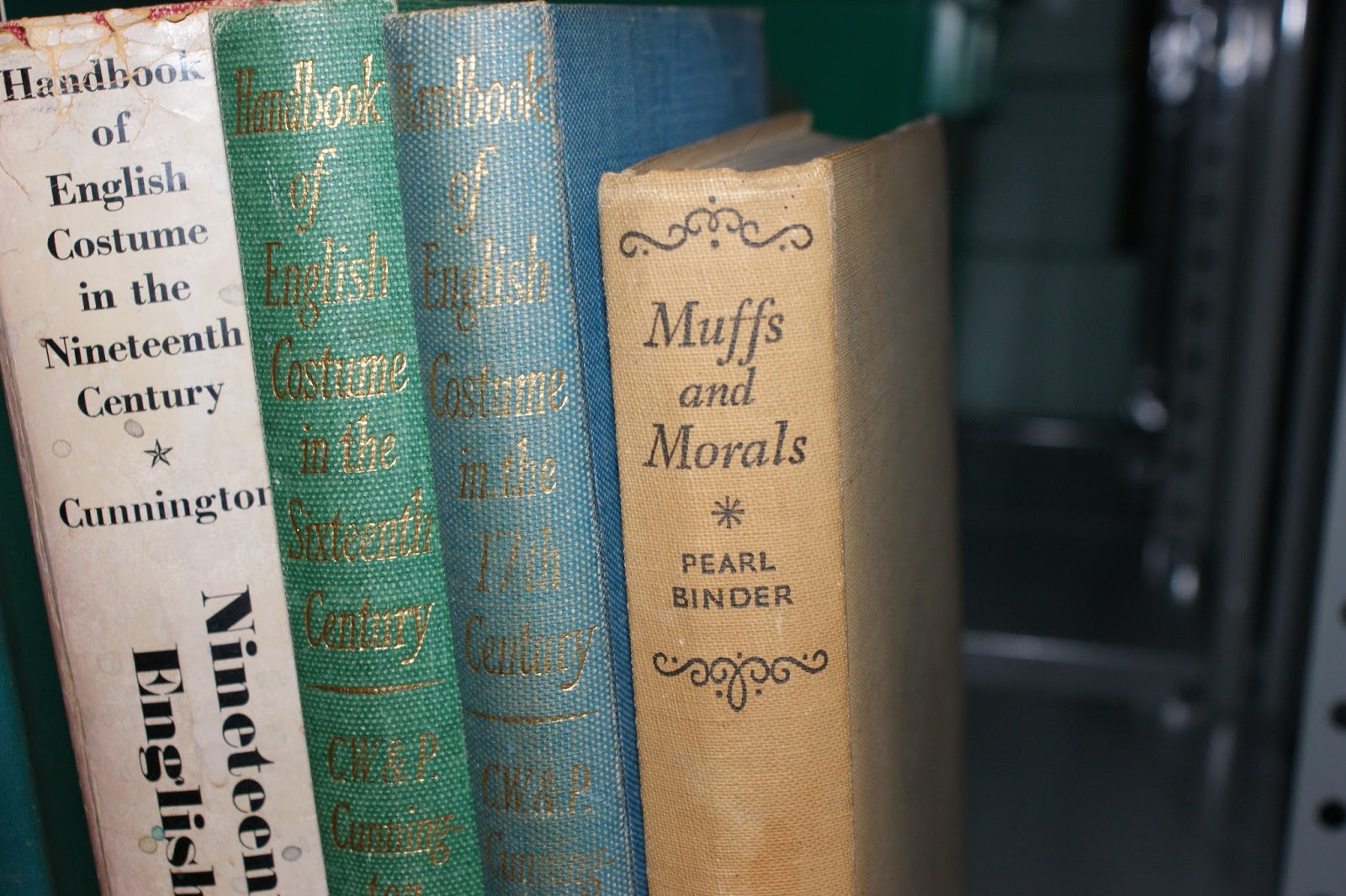
Unfortunately we don't have a copy of Chi Ming and the Tiger Kitten in our book collection to compare.  In fact the only one of Binder's books we do have is unrelated to her illustration work and shows a completely different side to her career; Pearl Binder as author, with an interest in both culture and fashion.  Illustrator Faith Jaques had a huge reference library for her illustration work, often for historical illustration, and Binder's Muffs and Morals (George G. Harrap & Co, 1958) is one of the many books about historical fashion that Jaques collected.  Binder also illustrated this title with line drawings which are characteristic of her style. 

Pearl Binder's Muffs and Morals (George G. Harrap & Co, 1958) as part of our Faith Jaques book collection © Seven Stories The National Centre for Children's Books.
Back to Pearl Binder as children's illustrator - the second book I want to show you also begins far away from both Binder's life in East London and China. In 1963 she illustrated K. Goell's Pocahontas (Florence printed). 

Front cover of illustration proofs by Pearl Binder for K. Goell's Pocahontas (Florence printed, 1963)   Photograph © Seven Stories The National Centre for Children's Books. 
Back cover of illustration proofs by Pearl Binder for K. Goell's Pocahontas (Florence printed, 1963)   Photograph © Seven Stories The National Centre for Children's Books. 
This is a printed proof for the book's illustration and is wordless.  You don't need the words to interpret Pearl's depiction of Pocahontas. It showcases the same bold colour palette yet seems very different from Chi Ming and the Tiger Kitten.  

Wedding celebration double page spread from illustration proofs by Pearl Binder for K. Goell's Pocahontas (Florence printed, 1963)   Photograph © Seven Stories The National Centre for Children's Books. 

As well as illustrating this version of the story Binder also designed a musical based on the historical figure of Pocahontas for Joan Littlewood at the Theatre Royal Statford East (Tyne and Wear Archives and Museums). 

If you're interested in Pearl Binder Spitalfields Life gives a fantastic in depth account of her work and her attachment to the East End of London. As part of a series of blog posts about 'Everyman prints' Tyne and Wear Archives and Museums explore more of her life and work. Design for Today have also written an interesting blog post which includes the cover image for Puffin Picture Book Misha Learns English. 

If you'd like to find out more about the Seven Stories Collection, then 

email: collections@sevenstories.org.uk or phone: 0191 495 2707 or comment on this blog.


Tuesday, 19 April 2016

Research the Seven Stories collection for your PhD

To further explore the relationship between Seven Stories and Newcastle University (after our excellent blog post by our researcher Meganour Vital North Partnership Manager, Rachel Smith has written this post about an exciting PhD opportunity. 

If you’re reading this blog, I’m guessing you’re probably interested in children’s books, in archival collections and in Seven Stories. You probably know that we use our collection in our exhibitions and our learning and participation projects. But did you know that you could also research our collections as part of your PhD?

And – right now, there’s a funded opportunity to do just that!

Newcastle University’s Research Excellence Academy PhD Studentships

Newcastle University are offering over £1million in PhD funding through their Research Excellence Academy scheme for students to start a full-time PhD in autumn 2016. Each studentship covers tuition fees and living expenses for the three years of your PhD studies. There are two schemes available:

Arts, Humanities and Social Sciences: This scheme covers a number of academic subjects, including English Literature, Education and Museum Studies, so this would particularly suit cross-disciplinary proposals. The deadline for applications is 30th April 2016. See: http://www.ncl.ac.uk/postgraduate/funding/sources/allstudents/hrea16.html

School of English Literature, Language and Linguistics: Children’s literature is one of the research strengths of the School of English. The department are also offering extra support to international applicants. The deadline for applications is 5pm on 16th May 2016. See: http://www.ncl.ac.uk/elll/study/postgraduate/funding/reastudentshipslitandcw.htm

For both of the Research Excellence Academy studentship schemes, Newcastle University’s Children’s Literature Unit would welcome applications to study our collections here at Seven Stories.


Which collections can I research?

It’s totally up to you!

Seven Stories holds archives from 1930 to the present day and our collection includes materials by over 250 authors and illustrators, including Enid Blyton, Philip Pullman and Edward Ardizzone. Seven Stories collects all sorts of material relating to children’s books: rough artwork, draft manuscripts, dummy books, correspondence, editor’s notes and anything else that helps us to explore how books are created.

Here are some examples of some of our larger collections that you could research:

The Peter Dickinson archive: Peter Dickinson is one of only two authors to win the Carnegie Medal twice in a row (can you guess the other?). Our collection, which includes drafts, proofs and correspondence, gives a fascinating insight into the working relationship between Dickinson and his editor, and the publication of children’s books in Britain and America.


Typescript draft of Tulku, Peter Dickinson c. 1978. Photograph © Seven Stories – The National Centre for Children’s Books

The David Fickling archive: We’ve blogged about this collection a lot! David Fickling is a children’s editor and publisher. This large archive shows his role as a contemporary children’s book editor. It includes proof and draft manuscripts for approximately 75 different writers, often with editor’s comments.

Typescripts of Linda Newbery’s Sisterland and Mark Herman’s screenplay of John Boyne’s The Boy in the Striped Pajamas from the David Fickling archive. Photograph © Seven Stories – The National Centre for Children’s Books

The Beverley Naidoo archive Our Learning and Participation team have already used this collection with local schools, and there’s great research potential here too. As well as Beverley’s manuscripts, the archive includes letters from her readers from the late 1980s, showing how attitudes to race and diversity have changed over three decades.


Typescript draft of Beverley Naidoo's 'Journey to Jo'burg' with some correspondence from fans. Photograph © Seven Stories – The National Centre for Children’s Book

The David Wood archive David Wood has been described ‘the national children’s dramatist’. And by looking at this huge collection, which includes material relating to the majority of Wood’s plays and books for children, you can see why. Find out more about the archive in Paula’s blog post, or come and listen to David talk about his work in our event at Newcastle Theatre Royal in May, Goodnight Mister Tom: Seven Stories in conversation with David Wood.


David Wood’s The Gingerbread Man in many shapes! A play manuscript and programme, a published copy and a TV episode list. Photograph © Seven Stories – The National Centre for Children’s Books

Our successful PhD students

Seven Stories and Newcastle University previously worked together to supervise three AHRC collaborative doctoral students exploring our Kaye Webb, Robert Westall and David Almond collections. The research our students did even formed the basis of our Nuffin’ Like a Puffin exhibition!

Section of the Nuffin' Like a Puffin' exhibition. Photograph © Seven Stories – The National Centre for Children’s Book
- Rachel Smith, Vital North Partnership Manager. 

If you are considering applying for either of Newcastle University’s Research Excellence Academy studentship opportunities in children’s literature, please contact Dr. Lucy Pearson, lucy.pearson@newcastle.ac.uk / +44 (0) 191 208 3894.

If you'd like to find out more about researching the Seven Stories Collection, then email: collections@sevenstories.org.uk or phone: 0191 495 2707 or comment on this blog.