Friday, 13 May 2016

Pearl Binder: from the East End to Hong Kong and North America.

Within our collections at Seven Stories, the National Centre for Children's books, we have collections that you might expect to find - Philip Pullman, Diana Wynne Jones, Judith Kerr, David Fickling, Michael Morpurgo - but we also have some unexpected but equally brilliant collections.  Pearl Binder wasn't primarily a children's book illustrator; she was known as a writer, artist and television personality, as well as being a sculptor and stained glass artist with an interest in fashion. She is a fascinating character and we're lucky enough to have material which relates to her role as children's book illustrator.

Binder was born in Salford but moved to London after the first world war to study at the Central School of Art and Design.  She settled in East London in the 1920's and the area features prominently in her work; Pearl illustrated Thomas Burke's The Real East End (Constable, 1932) and was an advocate of the Pearly Kings and Queens.   

Included in her achievements are her Pearly mug for Wedgewood, her work with Amal Gosh and City Literary Institute's stained glass evening class to design and make armorial windows for the house of Lords, and her involvement in the early days television broadcasting (British Museum: bibliographical details). According to Project Gutenberg she may have been the first heavily pregnant woman to appear on television . And, of course, because this is a Children's Literature blog another achievement to celebrate is Binder's Puffin Picture Book Misha Learns English (Puffin, 1942).

Though our collection of her material is small (all of two items!) it is still worth a blog post. The first item is her dummy book for Chi Ming and the Tiger Kitten (Dobson books, 1964) written by Binder's daughter Josephine Marquand. 

Dummy book dedication and title page by Pearl Binder for Chi Ming and the Tiger Kitten (Dobson books, 1964).  Photograph © Seven Stories The National Centre for Children's Books. 

Chi Ming and the Tiger Kitten is the first in a series of collaborations between Binder and Marquand about the little boy Chi Ming who lives on Hong Kong Island.  Interestingly, Binder was an adventurous traveller, with a particular interest in visiting and writing about China (Spitalfields Life). Whilst illustrating Chi Ming and the Tiger Kitten Pearl was living with her daughter Josephine Marquand in Hong Kong. 

Chi Ming and the Tiger Kitten is a story with many nuances, and a subtly educational feel. In 1964 Hong Kong was under British sovereignty so, Chi Ming and the Tiger Kitten  provides an insight into the Chinese culture of a region under British administration.  The book is beautifully detailed and tells the story of  a small boy, Chi Ming, and his family who are fruit sellers. 

Ladder Street was not really a ladder but a flight of grey stone steps running between two rows of crumbling houses on the island of Hong Kong.  At the top of the steps grew a very old Tree of Heaven, which burst into scarlet blossom every summer 
(Chi Ming and the Tiger Kitten, dummy book). 

Ladder street is set on a real street in Sheung Wan and the Tree of Heaven has a long history in Chinese culture - for medicine and as a metaphor (a father figure as a fully developed tree and a spoiled child a stump). 


Ladder Street in the typhoon.  Dummy book by Pearl Binder for Chi Ming and the Tiger Kitten (Dobson books, 1964).  Photograph © Seven Stories The National Centre for Children's Books. 

Dummy book. by Pearl Binder for Chi Ming and the Tiger Kitten (Dobson books, 1964).  Photograph © Seven Stories The National Centre for Children's Books. 

In the story the families of the street are so poor that they sleep under their stalls, and during a typhoon Chi Ming's family suffer the destruction of their canvas awning.  They also experience something that could only be lucky according to Chi Ming's uncle The Great-Uncle Ma.  It is the year of the Tiger and what should fall on Chi Ming's shoulder but a tiger kitten with five stripes? Five being a lucky number in Chinese culture, and associated with the five elements. 

Once the storm is over the family discover that the kitten belongs to the son of a very rich family.  Ma encourages Chi Ming to give the kitten back to the son despite Chi Ming's attachment to the kitten. As a reward for returning the kitten Chi Ming is asked what he would like. Nothing could replace the kitten so he asks for a replacement canvas for his family's stall.  

Though initially jealous of the tiger kitten's attachment to Chi Ming - a kitten that seems to favour the kind by sitting on their shoulder and purring - the young rich boy offers Chi Ming another gift out of kindness.  Perhaps the Tree of Heaven overlooking this story is a metaphor; we have both the guiding and steady figure of wisdom, The Great Uncle Ma, who encourages Chi Ming to do the right thing, and the spoiled child who learns to be kind and giving. 

This second gift is 'an enormous paper lantern in the shape of a white carp, with pink scales and red fins, a scarlet tail and curling yellow whiskers'  which enables Chi Ming to lead the Ladder Street children in the Moon Festival lantern parade. (Pearl Binder's dummy book for Chi Ming and the Tiger Kitten)


The Moon Festival double page spread. Dummy book by Pearl Binder for Chi Ming and the Tiger Kitten (Dobson books, 1964).  Photograph © Seven Stories The National Centre for Children's Books. 
The moon festival is the second largest festival in the Chinese lunar calendar. The festival celebrates three fundamental concepts: gathering, thanksgiving and praying. These three concepts also guide the plot of Chi Ming and the Tiger Kitten. Chi Ming's family and neighbours gather together in the aftermath of the storm, they are thankful for their luck and fortune in finding the kitten which enables them to fix the damage done by the storm and, at the very beginning of the story, Chi Ming visits the Temple to pray to Kuan Yin, the goddess of Mercy, to keep his family safe.  

Details of the Moon Festival; Chi Ming, the Great-Uncle Ma and the carp lantern. Dummy book by Pearl Binder for Chi Ming and the Tiger Kitten (Dobson books, 1964).  Photograph © Seven Stories The National Centre for Children's Books. 

As you can see the illustrations in the dummy book are rough but stunning.  If you look closer there is so much texture and detail to her work.  Binder has used a variety of techniques on separate pieces of paper and brings these together as a dummy book.  There has been careful attention to word placement with individual words being cut and pasted into place.  In places the text has also been annotated and ammended.

There are a variety of pen sketches and full colour spreads.  The coloured double page spreads are particularly stunning. They're so vibrant - with washes that sometimes overcome Binder's ink sketches.  These are usually mixed media - strong washes, with ink drawings and details picked out strongly in contrasting pastels (particularly in the typhoon and Moon Festival images above). 

Binder is able to perfectly capture different atmospheres of the story - as you can see in the Temple, the typhoon, the bustling street and parade which are photographed. 

At the Temple. Dummy book by Pearl Binder for Chi Ming and the Tiger Kitten (Dobson books, 1964).  Photograph © Seven Stories The National Centre for Children's Books. 


I find the street scenes  particularly interesting because the very lack of detail and the bright, yet limited colour palette, somehow seems to add to a sense of busy-ness.  

Street scene before the storm. Dummy book by Pearl Binder for Chi Ming and the Tiger Kitten (Dobson books, 1964).  Photograph © Seven Stories The National Centre for Children's Books. 

Unfortunately we don't have a copy of Chi Ming and the Tiger Kitten in our book collection to compare.  In fact the only one of Binder's books we do have is unrelated to her illustration work and shows a completely different side to her career; Pearl Binder as author, with an interest in both culture and fashion.  Illustrator Faith Jaques had a huge reference library for her illustration work, often for historical illustration, and Binder's Muffs and Morals (George G. Harrap & Co, 1958) is one of the many books about historical fashion that Jaques collected.  Binder also illustrated this title with line drawings which are characteristic of her style. 
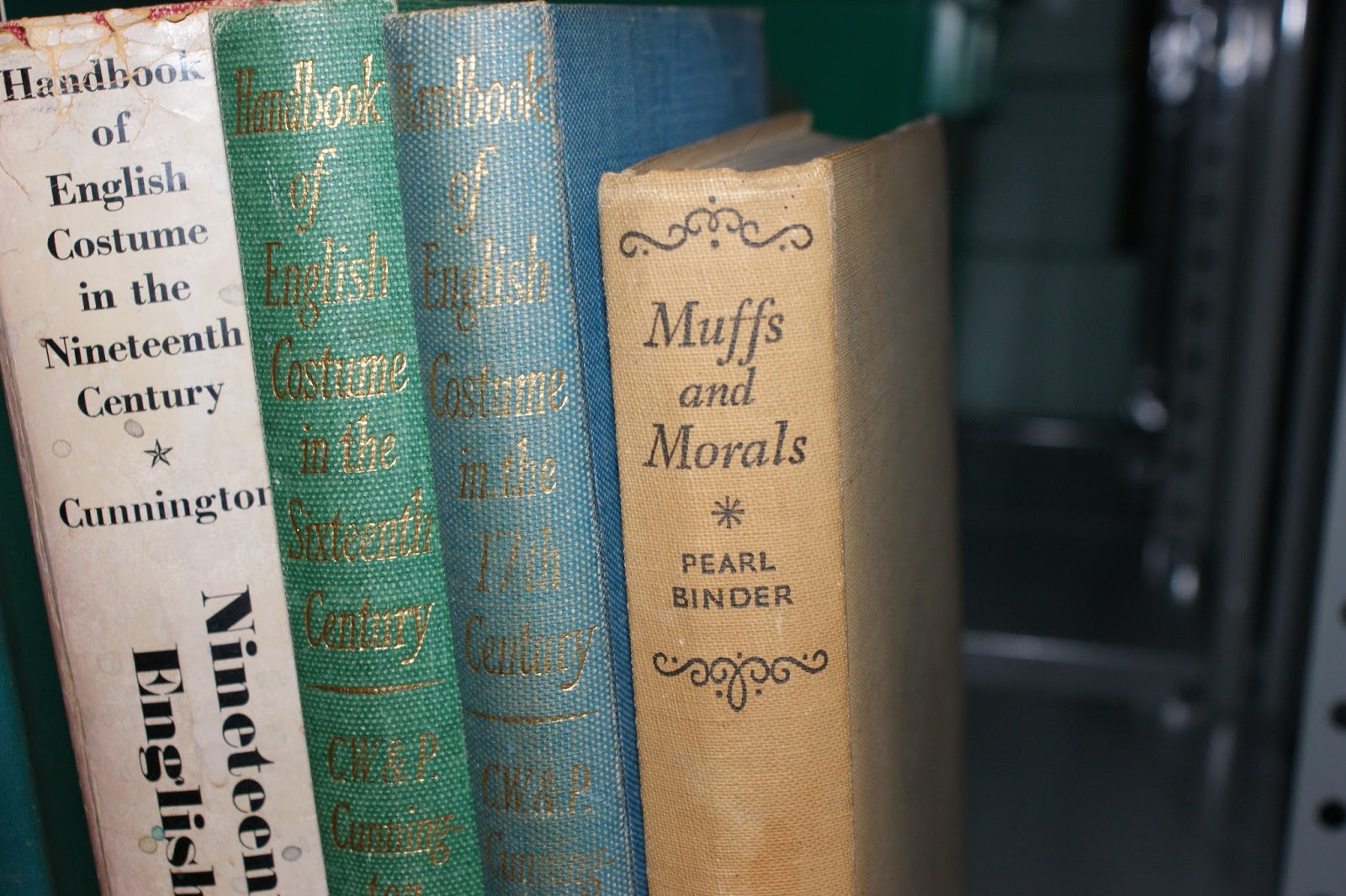
Pearl Binder's Muffs and Morals (George G. Harrap & Co, 1958) as part of our Faith Jaques book collection © Seven Stories The National Centre for Children's Books.
Back to Pearl Binder as children's illustrator - the second book I want to show you also begins far away from both Binder's life in East London and China. In 1963 she illustrated K. Goell's Pocahontas (Florence printed). 

Front cover of illustration proofs by Pearl Binder for K. Goell's Pocahontas (Florence printed, 1963)   Photograph © Seven Stories The National Centre for Children's Books. 
Back cover of illustration proofs by Pearl Binder for K. Goell's Pocahontas (Florence printed, 1963)   Photograph © Seven Stories The National Centre for Children's Books. 
This is a printed proof for the book's illustration and is wordless.  You don't need the words to interpret Pearl's depiction of Pocahontas. It showcases the same bold colour palette yet seems very different from Chi Ming and the Tiger Kitten.  

Wedding celebration double page spread from illustration proofs by Pearl Binder for K. Goell's Pocahontas (Florence printed, 1963)   Photograph © Seven Stories The National Centre for Children's Books. 

As well as illustrating this version of the story Binder also designed a musical based on the historical figure of Pocahontas for Joan Littlewood at the Theatre Royal Statford East (Tyne and Wear Archives and Museums). 

If you're interested in Pearl Binder Spitalfields Life gives a fantastic in depth account of her work and her attachment to the East End of London. As part of a series of blog posts about 'Everyman prints' Tyne and Wear Archives and Museums explore more of her life and work. Design for Today have also written an interesting blog post which includes the cover image for Puffin Picture Book Misha Learns English. 

If you'd like to find out more about the Seven Stories Collection, then 

email: collections@sevenstories.org.uk or phone: 0191 495 2707 or comment on this blog.


Wednesday, 4 May 2016

All About: Boats

Continuing our monthly transport themed blogs, Seven Stories Exhibition Curator David Wright explores the significance of boats in the work of Edward Ardizzone.

Last week, the Collections and Exhibitions team at Seven Stories, National Centre for Children’s Books was working full steam ahead to ensure that our new exhibition was shipshape and ready to open for bank holiday weekend.

The exhibition uses original artwork from the Seven Stories Collection to celebrate the eightieth anniversary of the publication of Little Tim and the Brave Sea Captain, the first picture book by one of Britain’s greatest illustrators, Edward Ardizzone.

Edward Ardizzone: 80 Years of Little Tim exhibition. 

Little Tim is Ardizzone’s most famous character, starring in a series of eleven picture books, published from 1936 – 1977. Originally created as a character to amuse his son Philip, Tim went on to become one of the great heroes of children’s literature, described by Maurice Sendak, creator of Where the Wild Things Are, as:

“A proper, courageous, if somewhat headstrong seven year-old who has an insatiable wanderlust and lives in a house by the sea…”

Seven Stories Collection © Edward Ardizzone Estate

Ships, the sea and adventures on the waves are at the heart of all of the Little Tim books, with many of Ardizzone’s own childhood experiences informing his stories.

As a boy, the young Ardizzone was engrossed by postcards sent from overseas by his parents, who travelled the world working on government service. He was also fascinated by a ship’s logbook written and illustrated by his Great Grandfather, who had captained a ship that sailed from London to Bombay and back in 1846 – 47.

Growing up at the coast in Ipswich, Ardizzone loved to play by the docks with his cousin Arthur, sneaking aboard the ships to explore, sometimes befriending the crew, sometimes being chased away. Later, Ardizzone lived in Deal, Kent, in a house close enough to the sea for the gentle music of the bands playing aboard passing cruise ships to drift through his bedroom window at night. This house, backing onto a long pebbly beach, is immortalised in his books as the home of Little Tim, and his friends Charlotte and Ginger.

Tim, Charlotte and Ginger outside Tim’s house.  Finished artwork from Tim and Charlotte (Oxford University Press 1951) Seven Stories Collection © Edward Ardizzone Estate

Little Tim himself certainly shares his creator’s enthusiasm for all things nautical. When not sipping grog with his friend Captain McFee or practicing his knots on the beach, Tim can be found spotting "Cunarders" through his telescope, making his plans to run away to sea.

Tim gets his wish in Little Tim and the Brave Sea Captain, sailing out with the old boatman, in a small motor boat memorably named Saucy Sue Walmer. Disaster is never far away in the Little Tim series and before long Tim is narrowly avoiding a one way trip to Davy Jones’ Locker.

Despite the danger of this first adventure, Tim is desperate to go to sea again and never struggles in finding work as a cabin boy. Always eager to help, throughout the series Tim can be found scrubbing decks and peeling potatoes, painting ships and delivering the captain’s dinner; even reading Moby Dick to the crew and writing love letters home for the ship’s cook.

Ardizzone used his childhood experiences to bring the lively atmosphere of ships and the camaraderie of their crew to life on the page. When Little Tim and the Brave Sea Captain was first published in New York, Ardizzone decided to make the journey across the Atlantic in a small, slow cargo boat, rather than a comfy cruise ship, as he felt more at home aboard ordinary working ships.

Finished artwork from Tim in Danger (Oxford University Press 1953) Seven Stories Collection © Edward Ardizzone Estate

Never exhausted by his daily chores, Little Tim always leaves time to avert catastrophe and save the day. A truly fearless hero, Tim is permanently on hand to rescue his friends (and the occasional ship’s cat) from the storms and shipwrecks that are par for the course in Ardizzone’s briny tales.

If reading this blog has helped you find your sea legs, why not visit Seven Stories this summer to see some of Ardizzone’s masterful original illustrations for yourself.


Edward Ardizzone: 80 Years of Little Tim is on show at the Seven Stories visitor centre until 18 September 2016.


If you'd like to find out more about the Seven Stories Collection, then 


email: collections@sevenstories.org.uk or phone: 0191 495 2707 or comment on this blog.

Tuesday, 19 April 2016

Research the Seven Stories collection for your PhD

To further explore the relationship between Seven Stories and Newcastle University (after our excellent blog post by our researcher Meganour Vital North Partnership Manager, Rachel Smith has written this post about an exciting PhD opportunity. 

If you’re reading this blog, I’m guessing you’re probably interested in children’s books, in archival collections and in Seven Stories. You probably know that we use our collection in our exhibitions and our learning and participation projects. But did you know that you could also research our collections as part of your PhD?

And – right now, there’s a funded opportunity to do just that!

Newcastle University’s Research Excellence Academy PhD Studentships

Newcastle University are offering over £1million in PhD funding through their Research Excellence Academy scheme for students to start a full-time PhD in autumn 2016. Each studentship covers tuition fees and living expenses for the three years of your PhD studies. There are two schemes available:

Arts, Humanities and Social Sciences: This scheme covers a number of academic subjects, including English Literature, Education and Museum Studies, so this would particularly suit cross-disciplinary proposals. The deadline for applications is 30th April 2016. See: http://www.ncl.ac.uk/postgraduate/funding/sources/allstudents/hrea16.html

School of English Literature, Language and Linguistics: Children’s literature is one of the research strengths of the School of English. The department are also offering extra support to international applicants. The deadline for applications is 5pm on 16th May 2016. See: http://www.ncl.ac.uk/elll/study/postgraduate/funding/reastudentshipslitandcw.htm

For both of the Research Excellence Academy studentship schemes, Newcastle University’s Children’s Literature Unit would welcome applications to study our collections here at Seven Stories.


Which collections can I research?

It’s totally up to you!

Seven Stories holds archives from 1930 to the present day and our collection includes materials by over 250 authors and illustrators, including Enid Blyton, Philip Pullman and Edward Ardizzone. Seven Stories collects all sorts of material relating to children’s books: rough artwork, draft manuscripts, dummy books, correspondence, editor’s notes and anything else that helps us to explore how books are created.

Here are some examples of some of our larger collections that you could research:

The Peter Dickinson archive: Peter Dickinson is one of only two authors to win the Carnegie Medal twice in a row (can you guess the other?). Our collection, which includes drafts, proofs and correspondence, gives a fascinating insight into the working relationship between Dickinson and his editor, and the publication of children’s books in Britain and America.


Typescript draft of Tulku, Peter Dickinson c. 1978. Photograph © Seven Stories – The National Centre for Children’s Books

The David Fickling archive: We’ve blogged about this collection a lot! David Fickling is a children’s editor and publisher. This large archive shows his role as a contemporary children’s book editor. It includes proof and draft manuscripts for approximately 75 different writers, often with editor’s comments.

Typescripts of Linda Newbery’s Sisterland and Mark Herman’s screenplay of John Boyne’s The Boy in the Striped Pajamas from the David Fickling archive. Photograph © Seven Stories – The National Centre for Children’s Books

The Beverley Naidoo archive Our Learning and Participation team have already used this collection with local schools, and there’s great research potential here too. As well as Beverley’s manuscripts, the archive includes letters from her readers from the late 1980s, showing how attitudes to race and diversity have changed over three decades.


Typescript draft of Beverley Naidoo's 'Journey to Jo'burg' with some correspondence from fans. Photograph © Seven Stories – The National Centre for Children’s Book

The David Wood archive David Wood has been described ‘the national children’s dramatist’. And by looking at this huge collection, which includes material relating to the majority of Wood’s plays and books for children, you can see why. Find out more about the archive in Paula’s blog post, or come and listen to David talk about his work in our event at Newcastle Theatre Royal in May, Goodnight Mister Tom: Seven Stories in conversation with David Wood.


David Wood’s The Gingerbread Man in many shapes! A play manuscript and programme, a published copy and a TV episode list. Photograph © Seven Stories – The National Centre for Children’s Books

Our successful PhD students

Seven Stories and Newcastle University previously worked together to supervise three AHRC collaborative doctoral students exploring our Kaye Webb, Robert Westall and David Almond collections. The research our students did even formed the basis of our Nuffin’ Like a Puffin exhibition!

Section of the Nuffin' Like a Puffin' exhibition. Photograph © Seven Stories – The National Centre for Children’s Book
- Rachel Smith, Vital North Partnership Manager. 

If you are considering applying for either of Newcastle University’s Research Excellence Academy studentship opportunities in children’s literature, please contact Dr. Lucy Pearson, lucy.pearson@newcastle.ac.uk / +44 (0) 191 208 3894.

If you'd like to find out more about researching the Seven Stories Collection, then email: collections@sevenstories.org.uk or phone: 0191 495 2707 or comment on this blog.


Monday, 18 April 2016

Bringing Seven Stories to the British Conference of Undergraduate Research

At Seven Stories, The National Centre for Children's Books, we have close ties to the Children's Literature department at Newcastle University which means that we hold workshops for their students and support research visits.  Megan Ayres, a final year undergraduate student, has recently been working with our collections.  Megan originally came as a researcher and ended up as a volunteer. As well as researching the Berlie Docherty collection she has listed some of Beverley Naidoo's collection and most recently she has taken her Seven Stories research to Manchester to champion our Collection, the North-East and literary studies. 

This month I was proud to be one of the students representing Newcastle University, in particular the School of English Language and Literature, at the British Conference of Undergraduate Research. This year the conference was held at Manchester Metropolitan University, and over a two day period in March hundreds of undergraduate students from all corners of the UK turned up to present their projects. I was all too glad (and a fair bit nervous) to be presenting my research on Berlie Doherty’s novel Dear Nobody (Hamish Hamilton, 1991) as a focus for my investigation on how the Young Adult novel represents teenage pregnancy. The Seven Stories Berlie Doherty collection was an irrefutable treasure trove for the information I needed, specifically, what goes into writing a book about a topic so culturally pervasive and, admittedly, controversial.

Front of the BCUR pamphlet. 

After walking fifteen minutes in the wrong direction, I made my way to the university to start the conference off by listening to a keynote speech about achieving success, which left me feeling very encouraged (getting lost aside) for my ten minute presentation. I couldn’t believe the range of topics available on the day, from publishing to tree bark. Though, admittedly, whilst there were a lot of business, science, and sociological research, there wasn’t much in the way of literature. So when it came to presenting research based on a close textual analysis of a novel I knew I was potentially doing something unfamiliar, which I hoped would be quite interesting for everyone. After all, looking at the world through the pages of a book is quite different than looking at it through quantitative heavy research.

Dear Nobody is a book that won the Carnegie Medal, has been adapted onto TV, radio, and the stage, and has been used as an educational tool for teaching children about safe sex in places like Germany. It’s undoubtedly a landmark novel for contemporary YA novels that include this issue and through the archive I was able to see just how far its influence stretched. It follows the story of Chris and Helen, two eighteen-year-olds about to leave school for university. These aspirations become jeopardised when Helen discovers she’s pregnant. Both Helen and Chris negotiate their feelings towards the pregnancy and their involvement in it, of which I focus predominantly on the letters Helen writes to ‘Nobody’, her unborn baby. I did this primarily to explore how Doherty validates the teenage mother by redefining ‘good’ mothering.

Front cover of Dear Nobody Puffin 2001 edition. 

One thing that became abundantly clear to me as I traversed through files and folios was the difference in the critical reception the novel received. For example, correspondence between Nicholas Tucker and Berlie Doherty clued me in that there had been a Channel 4 piece about the book, claiming it encouraged teenage pregnancy (Taken from ‘Correspondence 1990-1995’, Berlie Doherty Collection, BD/01/06/12/24). This stems from a long history of believing that children’s and adolescent novels have a didactic duty to encourage socially approved morals in readers. Nicholas Tucker, a renowned children’s literature critic, was exploring primarily how the novel frames the unborn child as an ‘ideal companion’ for the adolescent (Quoted from ‘Publicity & press cuttings’, Berlie Doherty Collection, BD/01/06/15/27).


Correspondence between Nick Tucker and Berlie Docherty, BD/01/06/24-30 Photograph © Seven Stories The National Centre for Children's Books

On the flip side, Doherty has maintained that the novel was never intended to be about ‘safe sex’, but a novel written with the hope of inspiring an emotional reaction in its readers (Quoted from ‘Correspondence 1990-1994, Berlie Doherty Collection, BD/01/06/12/24). This echoed on her Doherty’s website:

‘I simply wanted to write a book which would be interesting to teenagers. I never want to write a message or a moral in my books – I don’t think that’s a novelist’s job. If I can write a strong story that moves my readers, then that is as much as I want to do.’ (Quotation from berliedoherty.com)

Fan mail has also been divided on this account, most praise Doherty for her sensitive depiction of pregnancy, particularly prevalent in a letter from a mother who believes it should be compulsory reading for all parents and plans on giving it to her child when she is ready to read about such topics (Taken from ‘Correspondence 1990-1994’, Berlie Doherty Collection, BD/01/06/12/198). It becomes quite obvious that this book had a massive impact on its audience to the extent that it was considered a tool for the socialisation of young people.


Fan mail, BD/01/06/12/198.  Photograph © Seven Stories The National Centre for Children's Books


These ideas interact more broadly in my dissertation, which is smattered with the research I did in the archive. It fits into my discussion of what ideas are normally associated with the pregnant teenager, specifically that the teenage mother is associated with inadequacy, the father associated with immaturity, and rooted at the core of this issue that the young parent does not fit within the favoured nuclear family framework. Dear Nobody explores all three of these generalisations closely, and uses them to shape the novel’s view of teenage pregnancy as a deeply personal experience – which I believe contributes to its widespread popularity.

In my presentation I was able to look at the evidence for this view, and root it within a critical framework surrounding motherhood: particularly that the ideal of the female as innately nurturing is an inherently damaging ideology, because it implies that the woman’s only role in society is her biological one. Doherty ties the young mother, Helen, to the “ideal” mother to imply that the centrality of the mother role for the female transcends age, and therefore refutes the inadequacy associated with the teenage mother. This contrasts with the male, Chris, who is unprepared for the role of father, which highlights how despite rejecting the stereotypical association of the young mother with insufficiency, the father maintains a secondary position in which he is expected to be ill equipped.

This culminated into Doherty’s discussion of the nuclear family: the nuclear family is normally considered the favoured structure for socialising children. It is socially considered a stable structure, educating children in labour divisions between male and female, and introducing children to power structures operating within society that are integral to maintaining a Western, capitalistic society. But it’s not something the teenager has easy access to, which follows that the nuclear family is expressed as an oppressive force for the female in the novel. Undermining this view is the retention of approved gender roles - in which the female is innately nurturing - normally associated with the nuclear family, where the mother is typically imagined to care for the children. The figure of the pregnant teenager has been used as a theme allowing the discussion of broader issues surrounding gender.

As for me actually speaking, well, I was reassured that the room was still full by the end of it. The audience responded well to what I was saying, in fact everyone was talkative and engaged with the topics on offer throughout the entire day. There’s something to be said for being in an environment where people want to hear you ramble about something you’re now kind of emotionally invested in. It was nice to bring a little bit of the North East to Manchester, and Seven Stories with it. The North East was minority on the day, but then again so was literature research. I would encourage other literature undergraduates to get involved with BCUR, because it is valid research and people do want to hear about it. Public speaking isn’t nearly as scary as it appears, either (I promise).

Passing the BCUR bear onto the host of BCUR2017, Bournemouth University 

If you find yourself interested in looking at how the teenage parent is presented within the Young Adult novel I’d recommend Blue Moon (Puffin, 2003) by Julia Green, The Opposite of Chocolate (Macmillan, 2004) by Julie Bertagna, and Boys Don’t Cry (Corgi Childrens, 2011) by Malorie Blackman. 

- Megan Ayres, Newcastle University undergraduate. 

If you'd like to find out more about the Seven Stories Collection, then 

email: collections@sevenstories.org.uk or phone: 0191 495 2707 or comment on this blog.

Friday, 1 April 2016

All About: Time-slip

Since we've just changed the clocks and experienced our very own time-slip (be it only one hour forward), I thought we could investigate time travel as a mode of transport this month! I've chosen to look at Berlie Doherty's wonderful Children of Winter (Methuen, 1985), one of several time-slip titles that are represented in the Seven Stories' collection (more of these later). Berlie's collection (donated to Seven Stories, National Centre for Children’s Books in 2006 with an accrual received in 2009) consists of manuscripts, typescripts, draft material and related correspondence for 36 of her published works for children and for both of her adult novels. The collection also includes drafts and related material for several plays and radio broadcasts, and drafts of around 140 poems for adults and children, some apparently unpublished.

The files relating specifically to Children of Winter provide us with a fascinating record of the process of the writing, publishing and enduring impact of this book. Documents included are an early manuscript draft of the story, correspondence, reviews and press cuttings, educational resources, and even photographs taken on set during the filming of the Channel 4 dramatisation of the book. 

Covers of various editions (clockwise from top left) published by: Methuen, 1985 STSLS/01/241; Catnip, 2007 BD/09/04; Mammoth, 1995 BD/07/03; and Fontana Lions, 1986 NTL/03/119. Photograph © Seven Stories – The National Centre for Children’s Books

The idea for this story apparently came to Berlie while visiting Bowsen Barn, near High Bradfield, with a group of school children and writing ghost stories.  When Berlie asked the children who might have lived in the barn in the past one of the children suggested 'It could have been somebody sheltering from the Great Plague' and Berlie 'knew, straight away, that [she] was going to write a story about it'.  Berlie further describes Children of Winter as…

'... set at the time of the Great Plague in 1666, though it begins in the Derbyshire of today. It is loosely based on the story of the village of Eyam, not far from where I live, which lost half of its population to the plague. Eyam cut itself off from the rest of Derbyshire so that no other village would catch the Plague. In my story, three children are taken up to a barn, away from the village, and have to shelter there alone in order to survive. I tried to imagine what it would be like for them to have been so near home and yet not to be able to go there, and not to know what was happening to their family and friends in the village. It is about the Plague, but it could be about refugees from a war or from any kind of disaster. It’s about survival.'
(Extracts from Berlie Doherty’s website www.berliedoherty.com)

Berlie’s early manuscript drafts and notes for Children of Winter are written in two exercise books, under the story’s original title The Old Crook Barn.

Exercise books BD/01/02/01/01 and BD/01/02/01/02.  Photograph © Seven Stories – The National Centre for Children’s Books.

As well as numerous notes and drafts of the story, the exercise books contain a variety of other notes and lists, as well as drafts of several poems, and a partial draft of a story about Tilly Mint.

Exercise book BD/01/02/01/01 open at f31 showing early drafting and chapter planning.  Photograph © Seven Stories – The National Centre for Children’s Books
Exercise book BD/01/02/01/01 open at f33 showing early drafting and chapter planning.  Photograph © Seven Stories – The National Centre for Children’s Books

Berlie made few changes to her draft text in these exercise books but just occasionally she added in some beautiful descriptive text (apparently as it occurred to her) as here…

Exercise book BD/01/02/01/02 open at f26.  Photograph © Seven Stories – The National Centre for Children’s Books
We have one file of correspondence which relates to all aspects of the publication of Children of Winter including editorial changes, illustrations, dramatisation, reprints, contracts and royalties.  The file includes correspondence from: Jane Nissen and Miriam Hodgson (Berlie's successive editors at Methuen Children's Books); television / radio companies TVS, BBC and Carlton UK Television; and Murray Pollinger (Berlie's literary agent). The letter Berlie received from Jane Nissen below (BD/01/02/02/01 7th December 1983) is fascinating in that it shows the editor expressing interest in The Old Crook Barn but also raising concerns about the saleability of historical fiction, the time-slip element, use of colloquial /17th century English and similarities of the plot / theme (barn / plague / flashback) with Jill Paton Walsh’s book A parcel of patterns and Robert Westall’s Devil on the road.

Letter to Berlie BD/01/02/02/01 from Jane Nissen (Editor) Photograph © Seven Stories – The National Centre for Children’s Books.

In a letter dated 9th July 1984 Jane Nissen has obviously moved on from her original concerns about the plot theme and talks about commissioning Ian Newsham to illustrate the OLD CRUCK BARN (one of several variant spellings of the original title the more observant of you might notice!) and is anxious to get on with thinking of a new title (BD/01/02/02/04).  There are several more letters in this file which show how much Berlie and her editor discussed the detail in Ian Newsham’s illustrations, unlike many authors who seem to have little or no influence over the illustrations for their novels.


Berlie’s letter BD/01/02/02/05 to Angela Beeching and BD/01/02/02/08 to Jane Nissen © Seven Stories – The National Centre for Children’s Books

In the above letter to Angela Beeching dated July 13th 1984, we can see Berlie approaching Beeching with the idea of dramatising The Old Cruck Barn and even asking for an opinion about the title!  In her letter to Jane Nissen October 9th 1984 the final title Children of Winter has been agreed, and Berlie refers to discussions with the TV company about leaving the time-slip element out of their dramatisation entirely!  Thank goodness they didn't do that in the end!

Obviously when authors set their stories in the past (or travelling through time between the past and the present), it's important that they portray their settings accurately.  There's plenty of evidence within Berlie's archive of her carefully researching facts however, one letter, sent from a children's librarian, challenges her use of the name 'Tessa' as historically inaccurate! Unfortunately we don't have Berlie's response but interestingly, in the early drafts for this story the character did have a different name!  I'm intrigued as to why Berlie renamed this character and if you'd like to find out what her draft name was, you'll just have to visit us! 

The correspondence file also includes a small amount of letters from fans and school children including this lovely letter and a coloured version of the map drawn by another child who was clearly inspired by the map which appears in various editions of the book.


BD/01/02/02/31 Photograph © Seven Stories – The National Centre for Children’s Books
 BD/01/02/02/42 with Methuen edition of Children of winter, 1985 STSLS/01/241 Photograph © Seven Stories – The National Centre for Children’s Books

There's also a file of reviews and newspapers cuttings relating to Children of Winter, a few of which have been pasted onto card as well as a file of educational resources for teachers relating to both the book and radio broadcasts of Children of Winter.


Photos above show BD/01/02/03/04 and BD/01/02/03/05 and copies of: Author Focus: General Approaches plus Berlie Doherty and Children of Winter, Staffordshire County Council, 2000; and the teachers' notes to accompany the radio broadcasts of Children of Winter published by the BBC in 2003. BD/01/02/04.  Photograph © Seven Stories – The National Centre for Children’s Books


And to top things off nicely, there's even a set of colour photographs taken (perhaps by Berlie herself) on location during the filming of Channel 4's dramatisation of Children of Winter, which first aired in 1994.  The photographs include landscape shots and pictures of the cast and crew.
    

BD/01/02/05 Photograph © Seven Stories – The National Centre for Children’s Books
And finally, here's a letter from Berlie to the local Council raising concerns about an act of vandalism that occurred to the very real Bowsen Barn which inadvertently reveals details about just how far Children of Winter has endured in terms of foreign editions, reprints, TV and radio programmes as so on.

BD/01/02/02/21 Photograph © Seven Stories – The National Centre for Children’s Books

If you are as intrigued about the idea of 'time travel' as I am, you might like to know that other time-slip titles represented in Seven Stories' collection include: Peter Dickinson's Mandog; Philippa Pearce's Tom's midnight garden; Ursula Moray Williams’ Castle Merlin; and Lucy M Boston's The Stones of Green Knowe.  For further information about Berlie Doherty's archive and all these others, please view our online catalogue

     - Paula Wride (Collection Officer).


If you'd like to find out more about the Seven Stories Collection, then 

email: collections@sevenstories.org.uk or phone: 0191 495 2707 or comment on this blog.